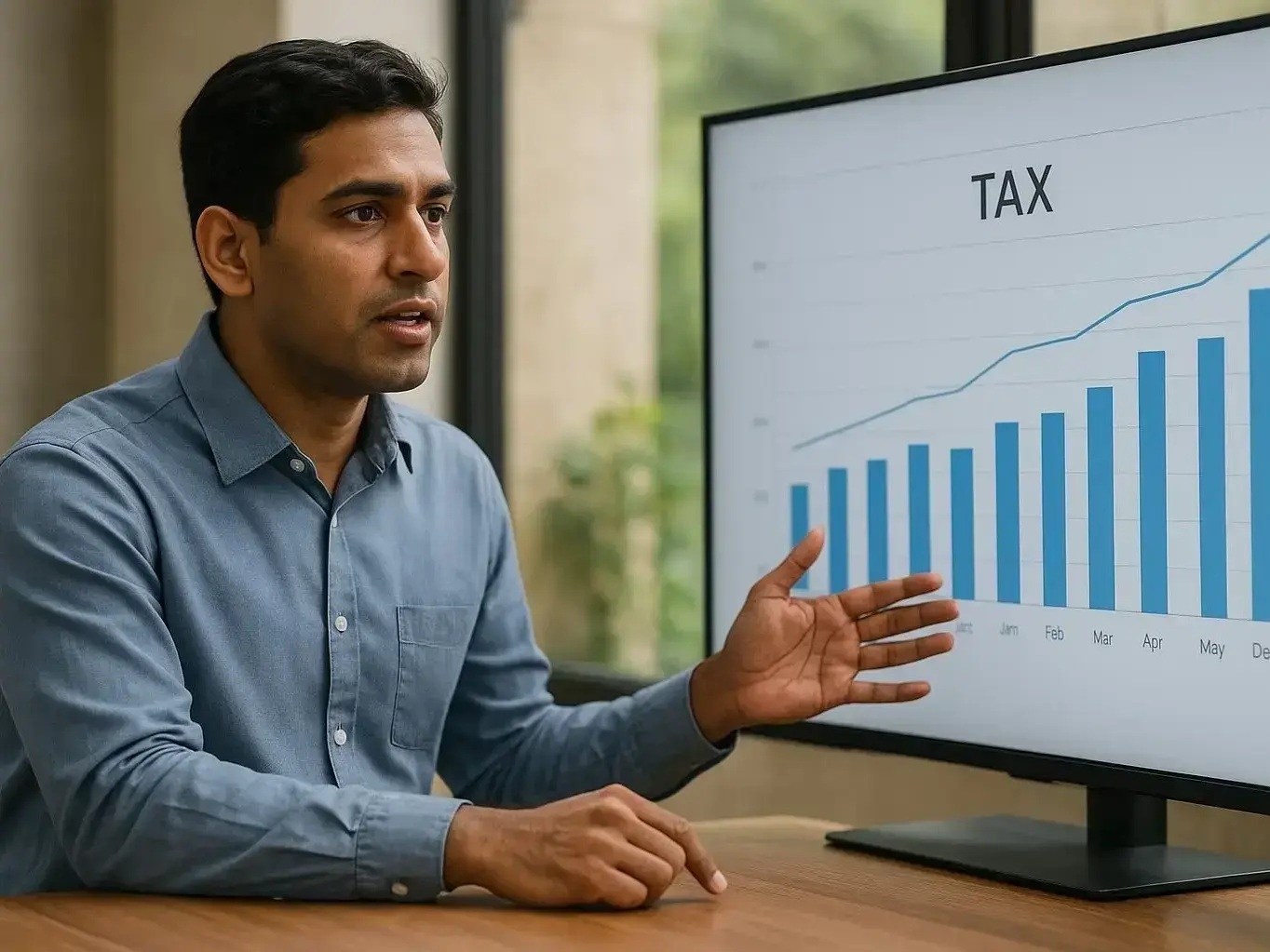
Navigating ITR filing in India can feel overwhelming, whether you're a salaried professional, freelancer, or business owner. At ITRFiling.org.in, we help Jaipur and all of India file accurate, penalty-free returns tailored to your unique financial situation—without the confusion.
ITR filing for salaried employees requires Form 16, salary slips, bank statements, and investment proofs. Gather these documents first to ensure a smooth filing process. You’ll also need PAN, Aadhaar, and details of any other income sources like rent or interest. Having these ready avoids last-minute delays.
ITR filing can be completed within 24-48 hours if all documents are provided. Timelines depend on return complexity and verification steps. Salaried individuals with straightforward income often see faster turnaround, while business owners may take slightly longer due to additional documentation.
Filing ITR yourself using tools like ClearTax is cost-effective but risks errors if your finances are complex. A CA ensures accuracy, optimizes deductions, and handles notices or audits. For freelancers or business owners, professional filing reduces compliance stress and maximizes legitimate tax benefits.
Yes, linking Aadhaar with PAN is mandatory for ITR filing in India. Check your status on the Income Tax e-filing portal under ‘Link Aadhaar’. If unlinked, complete the process online or via an SMS. Unlinked PANs can lead to rejected returns or delayed refunds.
You’ll need Form 16, bank statements, investment proofs, and details of other income sources.
Advance tax applies if your tax liability exceeds ₹10,000 in a financial year. Missing deadlines attracts interest under Section 234B/C. Freelancers, business owners, and high-income earners must pay in installments (June, September, December, March) to avoid penalties.
Advance tax for freelancers is calculated on projected annual income, minus TDS and deductions. Use Form 28A to estimate and pay in installments. Adjustments are allowed in subsequent installments if income changes, but consult a professional to avoid underpayment penalties.
Pay advance tax using Challan 280 on the Income Tax Department’s e-payment portal. Keep records of income estimates, TDS certificates, and previous tax payments. Submit proof of payment with your ITR filing to reconcile liabilities. No physical documents are required for online payments.
Advance tax applies to salaried individuals if their total tax liability (after TDS) exceeds ₹10,000. Include income from rent, interest, or freelancing in calculations. Employers typically deduct TDS on salary, but additional income may require advance tax payments to avoid interest charges.
You must pay advance tax if your tax liability exceeds ₹10,000 in a financial year.
Capital gains arise from selling assets like property, stocks, or mutual funds. Tax rates depend on holding periods: short-term (≤36 months) or long-term (>36 months). Short-term gains are taxed at slab rates, while long-term gains enjoy concessional rates (e.g., 10% for equities).
Report property sales in Schedule CG of your ITR, detailing purchase/sale dates, values, and expenses. Use Form 26AS to verify TDS deductions. Long-term gains may qualify for exemptions under Sections 54/54EC if reinvested in specified assets. Keep sale deeds and receipts for proof.
Capital losses can offset capital gains but not other income types (e.g., salary). Carry forward unadjusted losses for up to 8 years. File ITR on time to preserve this benefit. Consult a professional to strategize loss set-offs and minimize tax outgo.
Shares/mutual funds held ≤12 months attract short-term capital gains tax (15% + cess). Long-term gains (>12 months) are taxed at 10% on amounts exceeding ₹1 lakh. Report transactions in Schedule CG, using contract notes and demat statements for accuracy. Avoid penalties by disclosing all trades.
Capital Gains Tax Filing reports profits from selling property, stocks, or gold.
.
Income tax notice resolution typically takes 2-6 weeks, depending on notice complexity. Professionals expedite responses by preparing accurate documentation and liaising with tax authorities. Delays often stem from incomplete submissions or disputes over tax demands.
First, verify the notice’s authenticity on the Income Tax e-filing portal. Check the type (e.g., scrutiny, demand, or mismatch) and deadline. Gather supporting documents (e.g., ITR acknowledgments, bank statements) and consult a professional to craft a compliant response.
Tax consultants can request penalty waivers under Section 273A if errors were genuine and rectified. Provide valid reasons (e.g., illness, misplaced documents) and proof of compliance. Success depends on the tax officer’s discretion, but professional representation improves outcomes.
Scrutiny notices (e.g., under Section 143(2)) require detailed document verification for return accuracy. Demand notices (Section 156) request payment of outstanding tax, interest, or penalties. Scrutiny may lead to demands if discrepancies are found. Respond promptly to both to avoid escalation.
Reply to the notice quickly to avoid penalties.
ITRFiling.org.in can handle this process for you.
Yes, ITR filing for salaried individuals covers HRA, 80C deductions (e.g., PF, LIC, tuition fees), and other allowances. Provide rent receipts, investment proofs, and Form 16 to maximize refunds. Ensure deductions match employer declarations to avoid mismatches.
Omitting bank interest income can trigger a notice for underreporting. Interest is taxable under ‘Income from Other Sources’. Use Form 26AS to cross-check TDS deductions. Correct omissions by filing a revised return before the deadline to avoid penalties.
Salaried employees with income below ₹5 lakh may skip ITR filing if no tax is due. However, filing is recommended to claim refunds, apply for loans, or carry forward losses. Check exemptions under Section 139(1) and consult a professional for eligibility.
File ITR using salary slips, bank statements, and TDS certificates (Form 16A). Calculate taxable income manually and report it in the appropriate ITR form (e.g., ITR-1). Request Form 16 from your employer; delays may require provisional filing with later revisions.
You need Form 16 from your employer, bank statements for interest income, and proof of deductions like 80C, 80D, and HRA.
.
ITR filing for business owners focuses on income tax, while GST reconciliation is a separate compliance requirement. Ensure both filings align to avoid discrepancies. Business owners must report turnover, expenses, and profits in ITR-3 or ITR-4, using audited books if applicable.
Late ITR filing attracts a penalty of ₹5,000 (if filed by December 31) or ₹10,000 (later). Small businesses with turnover ≤₹5 crore pay ₹1,000. Interest under Section 234A also applies on unpaid tax. File on time to avoid additional scrutiny or audit triggers.
Business owners typically use ITR-3 (for professions) or ITR-4 (presumptive income). Required documents include balance sheets, profit/loss statements, bank statements, and GST returns. Maintain invoices and receipts for expense claims. Audit reports (Form 3CB/CD) may apply if turnover exceeds ₹1 crore.
Yes, business losses can be carried forward for up to 8 years to offset future profits. File ITR on time to preserve this benefit. Speculative losses (e.g., from trading) have separate rules. Consult a professional to optimize loss set-offs and minimize tax liability.
You need Form 16 (if applicable), P&L statements, balance sheets, and bank statements.
.
Companies must file ITR by September 30 (or October 30 if audit required). Missed deadlines incur penalties up to ₹1 lakh and interest on unpaid tax. Late filing also risks loss of deductions and increased scrutiny. Start early to avoid last-minute errors.
Private limited companies use ITR-6, requiring audited financial statements, tax audit reports (Form 3CB/CD), and GST filings. Include board resolutions, director details, and depreciation schedules. Ensure compliance with MCA and Income Tax Act provisions to avoid notices.
Startups may claim exemptions under Section 80-IAC (100% deduction for 3 years) or Section 54GB (capital gains reinvestment). Eligibility requires DPIIT recognition. File Form 10CCB for deductions and maintain proof of investments. Consult a professional to maximize benefits.
Transfer pricing rules apply to companies with international transactions. File Form 3CEB and maintain documentation (e.g., master file, local file) to justify arm’s-length pricing. Non-compliance attracts penalties up to 2% of transaction value. Engage a professional for compliance.
You’ll need your balance sheet, profit & loss statement, TDS certificates, and business expense records.
.
ITR filing for freelancers covers income from clients, deductions (e.g., 80C, 80D), and business expenses (e.g., internet, travel). Report gross receipts and claim expenses to reduce taxable income. Use ITR-3 or ITR-4 (presumptive scheme) based on turnover. Maintain invoices for proof.
Freelancers with tax liability >₹10,000 must pay advance tax in installments (15%, 45%, 75%, 100%). Calculate on projected annual income, minus TDS and expenses. Use Form 28A for estimates. Late payments attract interest under Section 234B/C. Consult a professional for accuracy.
Report foreign income in Schedule FA (foreign assets) and Schedule FSI (foreign income). Convert earnings to INR using RBI’s exchange rate. Claim foreign tax credits under Section 90/91 to avoid double taxation. Disclose all foreign bank accounts to comply with FEMA rules.
Freelancers with turnover >₹1 crore (or >₹50 lakh under presumptive scheme) must get accounts audited. File Form 3CB/CD with ITR. Audit ensures compliance with income tax and GST laws. Maintain books of accounts (e.g., cash book, ledger) to simplify the process.
ITR Filing for Freelancers in India works best when the scope, local factors, and expected outcome are clear first. ITRFiling.org.in explains what is included, how the process works, and what the next step looks like.
The Karta (senior male member) files ITR for HUF. Required documents include PAN, bank statements, investment proofs, and income details (e.g., rent, interest). Maintain a separate HUF bank account and register for PAN if not already done. Use ITR-2 or ITR-3 based on income sources.
Yes, HUF can claim 80C deductions (e.g., LIC, PPF, tuition fees) up to ₹1.5 lakh. Ensure investments are in the HUF’s name. Report deductions in Schedule DI of the ITR. Consult a professional to optimize tax savings and avoid disallowances.
HUF enjoys separate tax slabs and deductions, reducing the family’s overall tax liability. Income splitting between HUF and members lowers tax brackets. HUF can also claim exemptions (e.g., under Section 54) on capital gains. File ITR annually to retain benefits.
Report capital gains in Schedule CG of the HUF’s ITR. Short-term gains are taxed at slab rates, while long-term gains enjoy concessional rates. Claim exemptions under Sections 54/54EC if reinvested. Maintain sale deeds and purchase documents for proof. Consult a professional for complex transactions.
Any Hindu Undivided Family with taxable income must file ITR.
Let us handle your ITR filing so you can focus on what matters.
Get professional help with your income tax return today—contact us for a consultation.