Understanding Form 15G

Form 15G is a form. People under 60 use it. So do Hindu Undivided Families (HUFs).
They use it to tell banks or companies this. Their income is too low to pay tax.
When they give this form, the bank won't take tax from them. This tax is called TDS (Tax Deducted at Source).
TDS is taken from money like interest. This can be from fixed deposits or other savings.
This form follows rules in the Income Tax Act. The rule is called Section 197A.
You must give the form early. Do it at the start of the year. Or give it before you get the money.
To use Form 15G, you must meet two rules. First, your income must be below ₹2.5 lakh.
This is the tax limit for people under 60. Second, you must owe no tax after deductions.
Deductions can be from things like Section 80C. If you don't meet both rules, don't use the form.
If you do, you may get in trouble. You could face penalties under the tax law.
How Form 15G Works?
Form 15G tells banks not to take tax. It moves the job from them to you.
Banks check if you can use the form. They look at what you wrote.
You must write your PAN (a tax ID number) on the form. You also write your total income.
Then you list the money you don't want tax taken from. After you give the form, the bank won't take tax.
They tell the tax office about your form. They do this every three months.
Here's how it works:
- Fill out Form 15G. Write your PAN, the year. And income details.
- Give the form to your bank or company. Do this before they pay you.
- The bank checks if you can use the form. They make sure you meet the rules.
- If you can, they won't take tax. They tell the tax office about your form.
- Keep a copy of the form. That's your proof.
Form 15G doesn't stop all tax. It only works for some money.
It works for interest on savings. It doesn't work for salaries or fees.
Why Form 15G Matters?
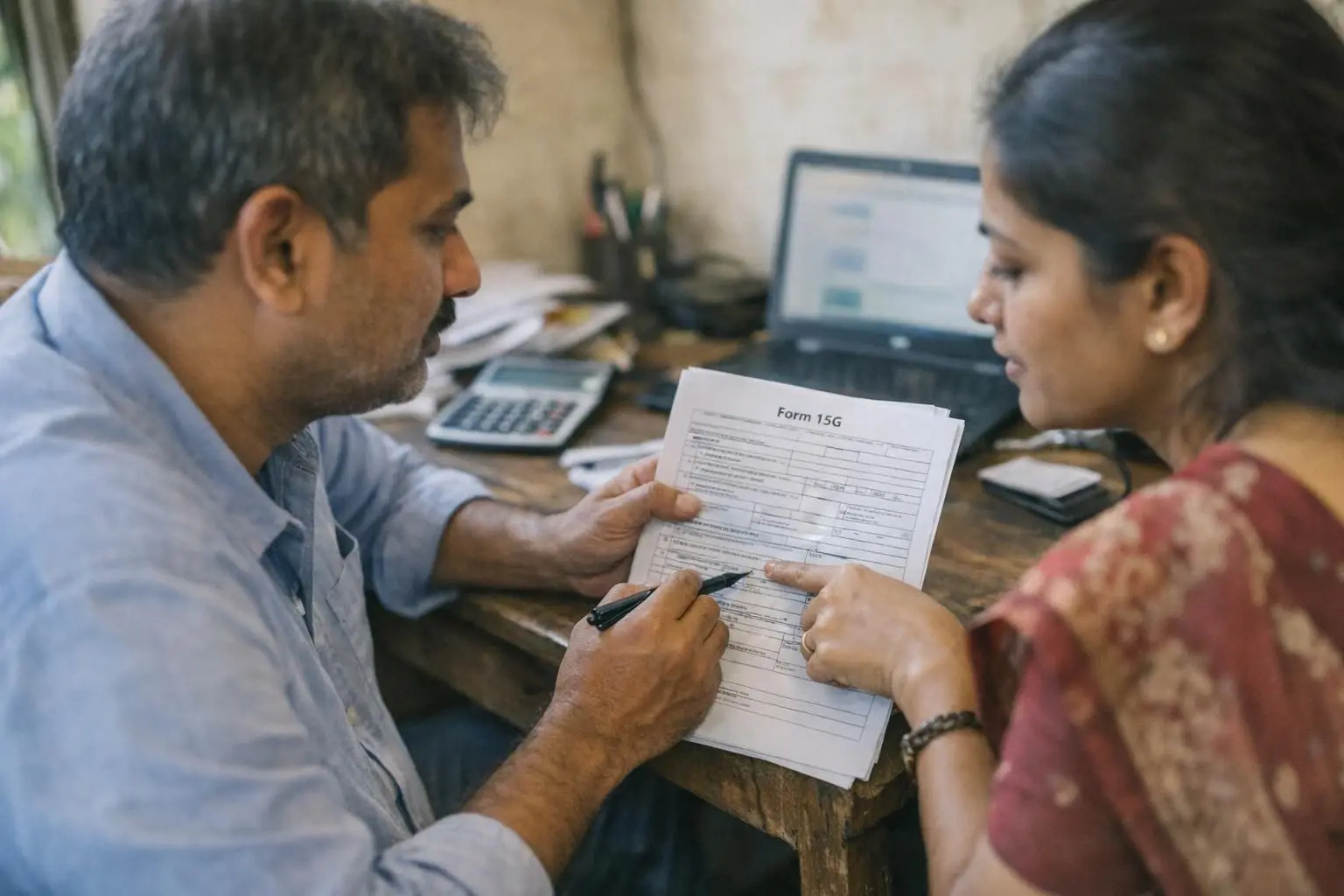
Form 15G helps people who don't owe tax. It stops banks from taking tax.
Without this form, banks must take tax. They take 10% from interest money.
This can cause problems. Some people need that money every day.
Older people or small savers may need it. The form saves them trouble.
They won't have to ask for their money back later.
Form 15G also helps the tax office. It shows who asked to skip tax.
This makes things clear. It stops people from cheating on taxes.
If you lie on the form, you can get in trouble. You may pay fines or go to jail.
When Form 15G Matters Most?
Form 15G works best for some people. They earn money that has tax taken from it.
But their total income is too low. So they don't owe tax.
Here are times you might use it:
- Interest from fixed deposits or savings accounts.
- Rent money less than ₹2.4 lakh a year.
- Money from bonds where tax is taken.
- Money taken from your EPF (a savings plan for work).
Give the form early. Do it at the start of the year.
Or give it before you get the money. If you're late, the bank may take tax.
Then you must ask for it back later.
Form 15G is not for everyone. People who live outside India can't use it.
They must use other forms. Those are Form 15CA and 15CB.