ITR Filing and Tax Refund Claim Process in India
In India, the ITR filing and tax refund claim process starts when you report your income, deductions, and taxes paid in your Income Tax Return. Then you verify the return, and the Income Tax Department processes any eligible excess-tax refund to your bank account. If your TDS, advance tax, or self-assessment tax is more than your real tax due, you can claim a refund by filing the right ITR, checking your bank details, and finishing e-verification on time.
What Is the ITR Filing and Tax Refund Claim Process in India?
ITR filing and tax refund claim process in India means reporting income, deductions, and taxes paid, then verifying the return so the Income Tax Department can process any eligible excess-tax refund to your bank account. Put simply, your Income Tax Return (ITR) shows your tax liability for the year, and the refund is the extra tax paid back to you. This is a key tax compliance step in India’s income tax process, whether you use income tax return filing, e-filing of ITR, or tax return submission through the portal.
The process begins with correct tax calculation using salary, business, or freelance records. After that, you match credits in Form 26AS and AIS/TIS. Once you file, e-verification confirms the return and starts processing. If the details match, refund status usually moves fast. If they don't, the tax department may ask for a correction. For salaried taxpayers, Form 16 is often the main proof. Others depend more on bank statements, invoices, and advance tax records.
In practice, this workflow links your income tax return, refund eligibility, TDS credit, and bank account validation in one online flow. Clean filing helps cut delays, lowers the risk of notices, and improves the chance that the refund gets credited without more follow-up. For taxpayers in India, especially in cities like South Kolkata, digital accuracy matters because identity checks, PAN-Aadhaar linking, and portal verification all affect the final release.
Who Can Claim an Income Tax Refund in India?
A taxpayer can claim an income tax refund in India when the total tax already paid through TDS, advance tax, or self-assessment tax is more than the final tax liability calculated in the ITR. The refund claim is not only for salaried people. It also applies to freelancers, consultants, business owners, and other assessees who have paid more tax than needed.
In India, many refund claims happen because estimated tax and final tax do not match. A person may have high TDS credit from salary, rent, or interest, yet still owe less tax because of deductions, losses, or lower final income. The main test is simple: if the taxes already paid are more than the tax liability, a refund can be claimed in the return.
What Documents and Details Do You Need Before Filing?
Before filing an ITR for refund claim in India, you need income proofs, tax credit statements, bank account details, and deduction records. That way, the return matches your reported taxes and the refund can be credited without a mismatch. Good preparation helps avoid correction notices and makes online filing smoother.
Matching Form 26AS with AIS/TIS is especially important because even small differences can create a mismatch. In India, refund release depends on digital identity checks through the income tax portal, so e-filing and e-verification are only part of the job. Your bank account must also be validated correctly, or the refund may fail even when the return is right. For many taxpayers, this document set is the difference between a smooth refund and a long delay.
What Are the Steps in the ITR Filing and Refund Claim Process?
The ITR refund process in India follows a clear order: gather records, choose the right ITR form, compute tax, file the return, e-verify it, and then track refund processing until the excess tax reaches your bank account. Each step affects refund eligibility and processing status, so accuracy matters more than speed.
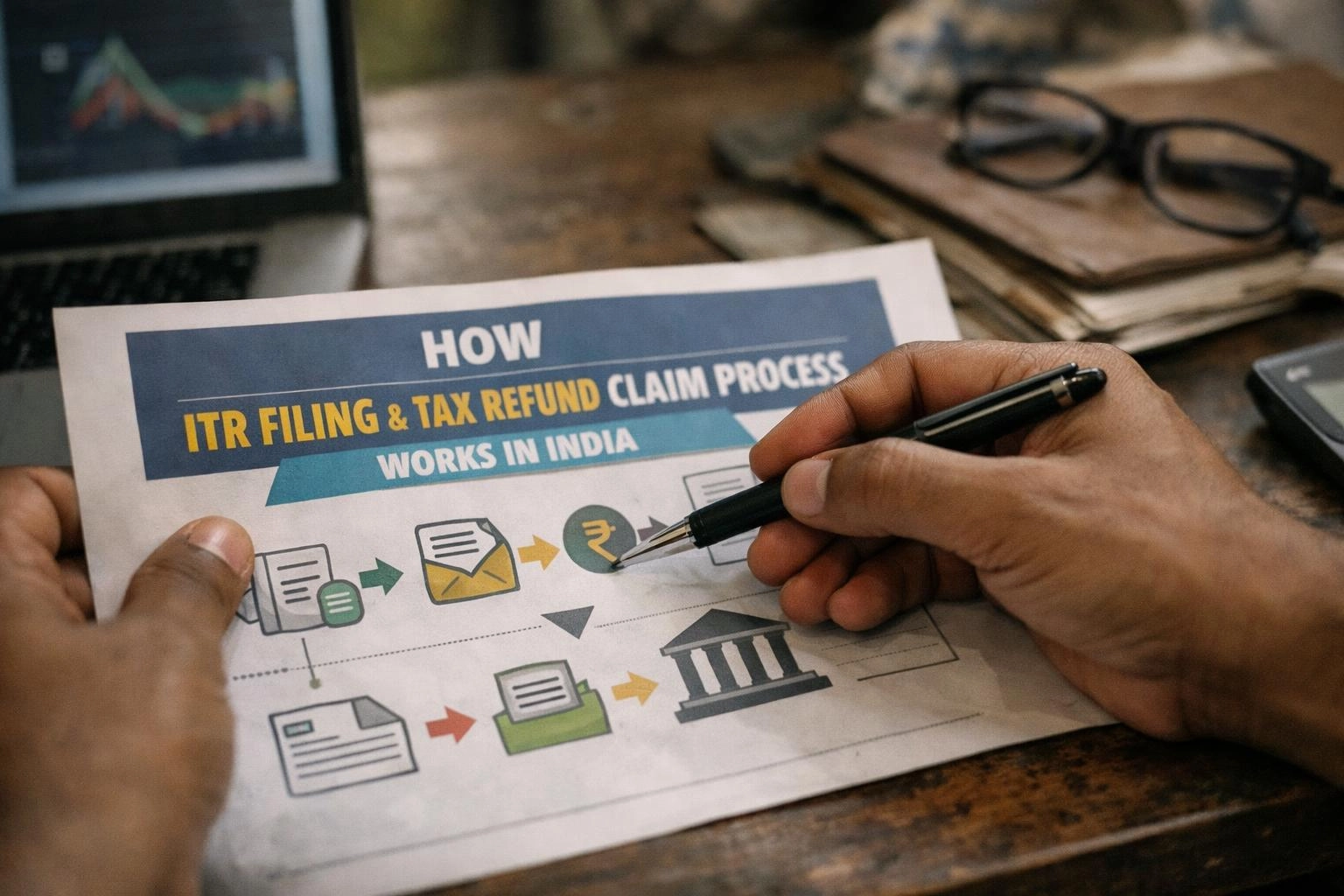
For many people in South Kolkata, the best approach is to treat this like a compliance workflow, not a one-time form fill. Salaried taxpayers usually rely on Form 16 plus Form 26AS, while freelancers and business owners must reconcile advance tax and self-assessment tax more carefully. If the return is prepared well, refund processing is usually simpler and the chance of a defective return is lower.
How Long Does an ITR Refund Usually Take in India?
ITR refunds in India usually depend on how quickly the return is filed, verified, and processed. Simple filings move faster, while mismatches, notices, or bank issues can make the refund take longer. The tax department’s processing status matters, but so do return quality, bank account validation, and whether Form 26AS and AIS match the filed data.
| Project size | Typical duration | Typical refund condition |
|---|---|---|
| Small | Usually a few days to a few weeks after verification | Simple salaried return with clean Form 16 and no mismatch |
| Average | Often a few weeks, depending on review and portal load | Standard return with deductions, TDS credit matching, and normal checks |
| Large | Can take longer when scrutiny, notices, or corrections are needed | Higher-value or complex return with multiple income heads or mismatches |
These are typical ranges, not fixed deadlines. Faster refunds usually come from accurate e-filing, prompt e-verification, and clean matching of TDS credit and bank details. If the return needs a correction, the timeline gets longer because the tax department must clear the mismatch before the refund can move ahead.
Why Do ITR Refunds Get Delayed or Rejected?
ITR refunds get delayed or rejected in India when income details mismatch, bank account validation fails, PAN and Aadhaar are not aligned, or the return has errors that trigger correction requests or defective return notices. Most of these issues can be avoided if the return is checked carefully before e-filing.
In India, the most common trouble spots are practical ones: PAN-Aadhaar linking, bank account validation, and matching Form 26AS and AIS entries. A taxpayer in South Kolkata follows the same rules as anyone else, but local service support can help catch errors before filing. That matters because a small mismatch can turn a simple refund into weeks of follow-up.
How ITRFiling.org.in Helps with Refund-Safe Filing in India?
ITRFiling.org.in helps taxpayers file accurate personal ITRs in India, check refund eligibility, reduce mismatch risk, and complete the filing and verification process with professional support focused on faster and safer refund outcomes. The service is useful when you want an expert review before submission, especially if your return depends on Form 16, Form 26AS, AIS, or multiple tax credits.
For salaried taxpayers, the review can help align salary data and TDS credit. For freelancers and business owners, it can help reconcile advance tax and self-assessment tax before filing. That kind of compliance support is helpful when you want fewer corrections, cleaner e-filing, and better refund status tracking. In a city like South Kolkata, local guidance also helps people handle portal steps, bank account validation, and e-verification with less stress.
Frequently Asked Questions
For filing support, check the contact page here: Get expert ITR help.