Step-by-Step Capital Gains ITR Filing Process in India
To file an ITR for capital gains in India, first identify the asset sold, then calculate short-term or long-term gains, and collect the sale deed, purchase proof, and brokerage details. Next, choose the right ITR form, report capital gains in Schedule CG, and claim any valid exemptions if they apply. Finally, verify and e-file the return before the due date so you avoid notices, delays, and interest.
How Do You File ITR for Capital Gains in India, Step by Step?
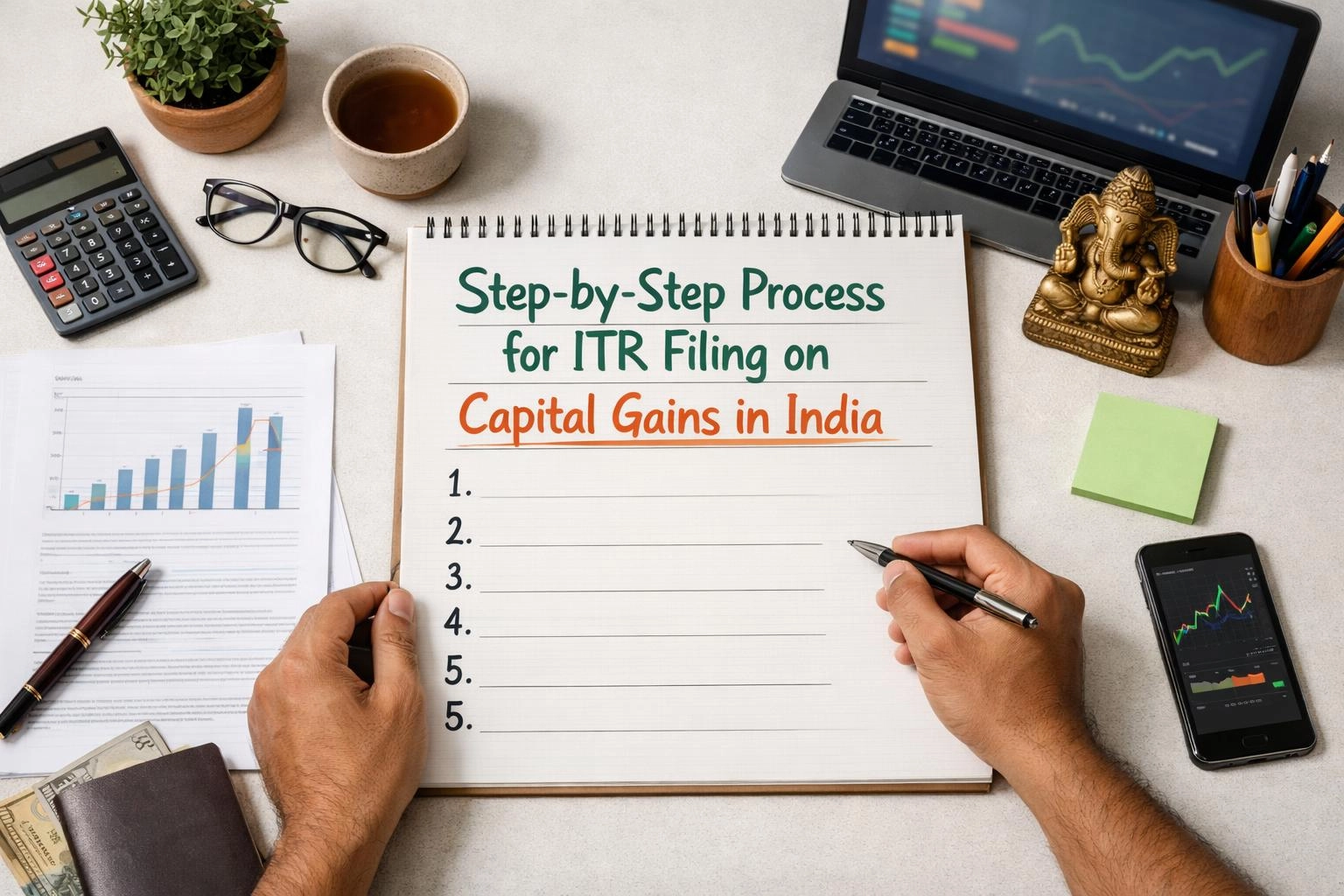
ITR filing for capital gains in India starts with identifying the asset sale, calculating the gain, choosing the correct ITR form, and reporting details in Schedule CG. Then you claim eligible exemptions and e-file the return on the income tax portal. This income tax filing process matters because capital gains tax in India depends on the asset type, holding period, and whether your sale involves listed securities, a capital asset, or property. The return should also match AIS and Form 26AS, so broker data and reported figures line up.
Step 1: Collect the Sale and Purchase Records
Step 2: Classify Short-Term or Long-Term Capital Gains
Step 3: Pick the Right ITR Form for Your Income Profile
Step 4: Report Gains in Schedule CG and Claim Exemptions
Step 5: Pay Any Tax Due, Verify the Return, and Keep Proofs
Which ITR Form Should You Use for Capital Gains in India?
Capital gains income is usually reported in ITR-2 for individuals and HUFs without business income, while taxpayers with business or profession income generally use ITR-3. The right form depends on your total income profile, the type of gain, and the other schedules you must disclose. In India, this matters because the e-filing portal checks schedule mapping, and the wrong return can cause rejection or later correction. If you have salary plus gains, or capital gains tax return filing alongside other passive income, the form choice still depends on whether business income exists.
For most salaried taxpayers, ITR-2 handles salary, house property, foreign assets where relevant, and capital gains reporting. ITR-3 becomes relevant when you run a proprietorship or have profession receipts in addition to the asset sale. This split is important for tax compliance because the same capital asset sale may fit different forms depending on the rest of the return. Always match the form to the full income basket, not just the gain itself.
What Documents Do You Need Before Filing Capital Gains ITR?
Capital gains ITR filing requires documents that prove cost, sale value, and tax already paid. Typical records include purchase and sale proofs, contract notes, property deeds, capital gains statements, broker statements, and Form 26AS or AIS to cross-check reported income and TDS. Good paperwork also helps with indexed cost of acquisition calculations and supports any tax exemption claim. In India, proper records are especially useful when broker data does not match the Annual Information Statement.
How Long Does Capital Gains ITR Filing Usually Take?
Capital gains ITR filing time depends on the number of assets sold, whether exemptions are claimed, and how complex the supporting records are. Simple return preparation can be quick, while property sales, multiple securities, or exemption planning usually need more review and reconciliation. The timelines below are only examples, and they assume the records are already organized. That often saves the most time in India’s income-tax filing workflow.
| Project size | Typical duration | What it usually includes |
|---|---|---|
| Small portfolio | A few hours to 1 day | One or two securities, limited documents, basic Schedule CG entry |
| Average | 1 to 3 days | Mixed gains, exemption review, AIS reconciliation, and form checking |
| Large | Several days to over a week | Property sale, multi-asset gains, indexed cost review, and detailed support review |
What Errors Cause Notices in Capital Gains Returns?
Capital gains returns often trigger notices when sale values do not match AIS or broker data, the holding period is classified wrongly, exemptions are claimed without full proof, or the taxpayer uses the wrong ITR form. Careful reconciliation and documentation reduce correction demands and scrutiny. In India, AIS mismatch is a common local failure point, so it is wise to compare every trade, property receipt, and TDS line before filing.
Another common issue is reporting a gain as long-term when the asset actually qualifies as short-term capital gains, or the other way around. A wrong holding period can change tax rates and invite review. Missing or weak proof for a Section 54 or Section 54EC exemption can also cause adjustment notices. The safest approach is to verify the transaction trail, keep broker statement copies, and cross-check the return before submission.