Signs You Need to File ITR for House Property Income in India
You need to file ITR for house property income in India if you earn rent, have a deemed let-out property, claim home loan interest, or want to report losses from house property. You also need to file when your property income, total income, TDS, or refund claims make filing mandatory. If you have multiple properties, co-owned property, or rental income with taxes deducted, filing helps you stay compliant and claim eligible deductions.
You need to file ITR for house property income in India when your property earns rent, is treated as deemed let-out, has TDS deducted, or creates a loss you want to carry forward. Filing also matters if you want to claim home loan interest, report co-owned income, or stay compliant with Indian tax rules.
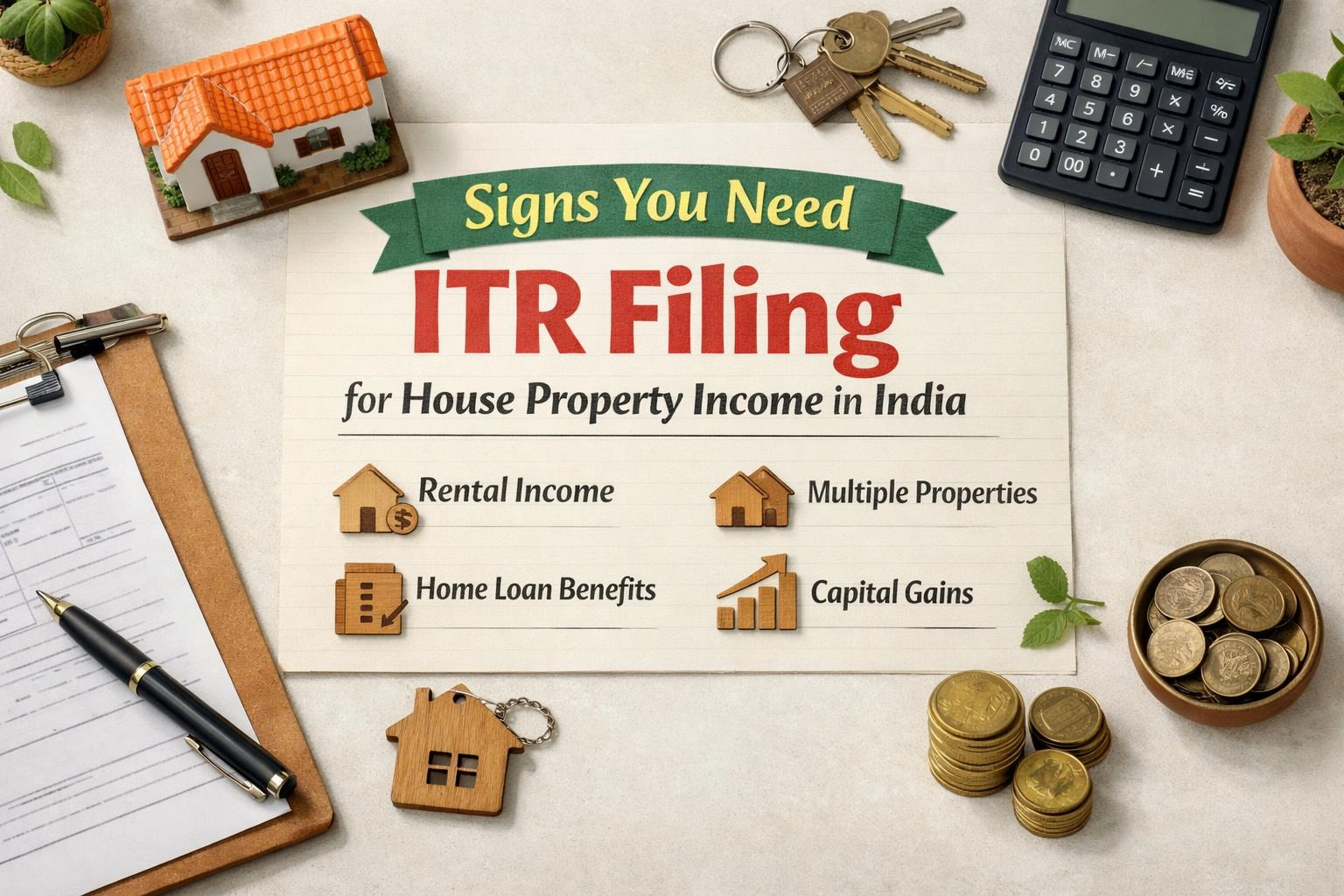
In India, self-occupied vs deemed let-out treatment changes the filing need based on occupancy, so an empty extra home can still create taxable reporting. That is common for families who move between cities and for people holding a second flat in a growing urban market. The safe approach is to check the property type, tenant payments, tax deducted, and whether your house property income affects total taxable income. When in doubt, filing early keeps your real estate income return clean and lowers mismatch risk.
Do You Have Rental Income from a House or Flat?
If you receive rental income from a house or flat, you usually need to report it in your income tax return, even if the amount seems small. The tax calculation starts with the gross annual value, then considers municipal taxes and the standard deduction. This is the main step for reporting rent from house property, and it matters more when rent comes through bank transfers and tenant payments are easy to track.
For many taxpayers, rental receipts are simple, but bank entries, tenant PAN, and Form 26AS can still affect the return. If the rent is taxable after deductions, filing is part of normal income tax compliance, not an extra choice.
Is Your Property Treated as Deemed Let-Out?
If your deemed let-out property is a second home, unsold unit, or another residential property not actually occupied by you, the tax rules may assign an annual value even when no rent is received. That can create taxable house property income and a filing trigger. The treatment matters because a self-occupied property is handled differently from a vacant extra home.
This is especially relevant in cities where owners keep one home for living and another for investment or family use. In such cases, the income tax return must show the correct occupancy status so the tax treatment matches the law and the records.
House-property situations make ITR filing necessary in India when you have rent from one or more properties, own more than one house, share ownership with others, claim home loan interest, or receive taxable rental receipts. These situations often trigger reporting, deduction claims, or refund eligibility that only an ITR can properly capture.
Professional review helps more when rent is split between owners, one home is self-occupied and another is not, or the records do not match the bank statement. In Indian practice, municipal tax proof, rent receipts, and interest claims often decide whether the return is accurate.
House property income is taxable in India when rent or deemed annual value remains after allowed deductions such as municipal taxes and standard deduction. It is not exempt just because the property is residential or self-owned. The tax treatment depends on occupancy, ownership, rent received, and eligible deductions under Indian income tax rules.
The key question is whether the amount left after deductions becomes taxable income. Exempt income is rare in this head unless the facts truly remove taxability. You first arrive at the annual value, subtract municipal taxes paid, apply the standard deduction, and then consider interest on borrowed capital where allowed. The result can be positive income, nil income, or a loss.
For most taxpayers, the rule is simple: a self-occupied property may have different treatment from a rented or deemed let-out property, but it is not automatically outside the tax net. The filing decision depends on the facts, not only on whether the home is used for living. That is why the computation of house property income matters before you submit the tax return.
DIY filing works for simple rent reporting, but professional help is better when you have multiple properties, loss carry-forward, co-ownership, home loan interest, or TDS reconciliation issues. A professional lowers errors in computation, improves deduction claims, and helps avoid mismatches between your bank records, tenant payments, and the income tax return.
| Factor | DIY | Professional |
|---|---|---|
| Form 16 and portal use | Works well if your filing is simple and the income tax portal data already matches. | Helpful when the portal records need review against rent, interest, or other income. |
| Computation of income | Fine for a single rented home with clean receipts and basic deductions. | Better for multiple properties, deemed rent, or split ownership. |
| TDS matching | Possible if Form 26AS and AIS already show the same figures as your bank records. | Safer when tenant deductions, credits, or reporting gaps need reconciliation. |
| Deduction claims | Simple claims can be managed with rent proof and interest certificates. | Useful when home loan interest deduction and municipal tax claims need careful support. |
| Risk level | Lower for straightforward reporting rent from a single property. | Lower notice risk for complex property tax filing and real estate income return cases. |
If you only have one tenant, one property, and clear records, DIY tax filing can be enough. If your situation includes co-owned property, loss from house property, or more than one home, professional ITR filing is usually the safer route.
You should keep rent agreements, rent receipts, municipal tax proof, home loan interest certificates, tenant details, and ownership records before filing house property income. These documents support correct rental reporting, deduction claims, and evidence for ownership or co-ownership if the tax department asks for clarification.
Keep Form 26AS and AIS handy as well, because rental credits and TDS can show up there. Good records make the income tax return faster and reduce back-and-forth later.
If your house property income involves rent, deemed let-out status, co-ownership, loan interest, or loss reporting, filing correctly matters for compliance and refunds. A guided ITR filing service helps you choose the right return, compute property income correctly, and avoid notices, mismatches, and missed deductions.
For many taxpayers, the hard part is not the filing form itself but the detail work behind it. A guided ITR filing service can align your tax return with bank records, tenant payments, and the legal treatment of your property. That is especially useful when you want accuracy without spending hours on review.