ITR Filing for Proprietorship vs Private Limited Company in India
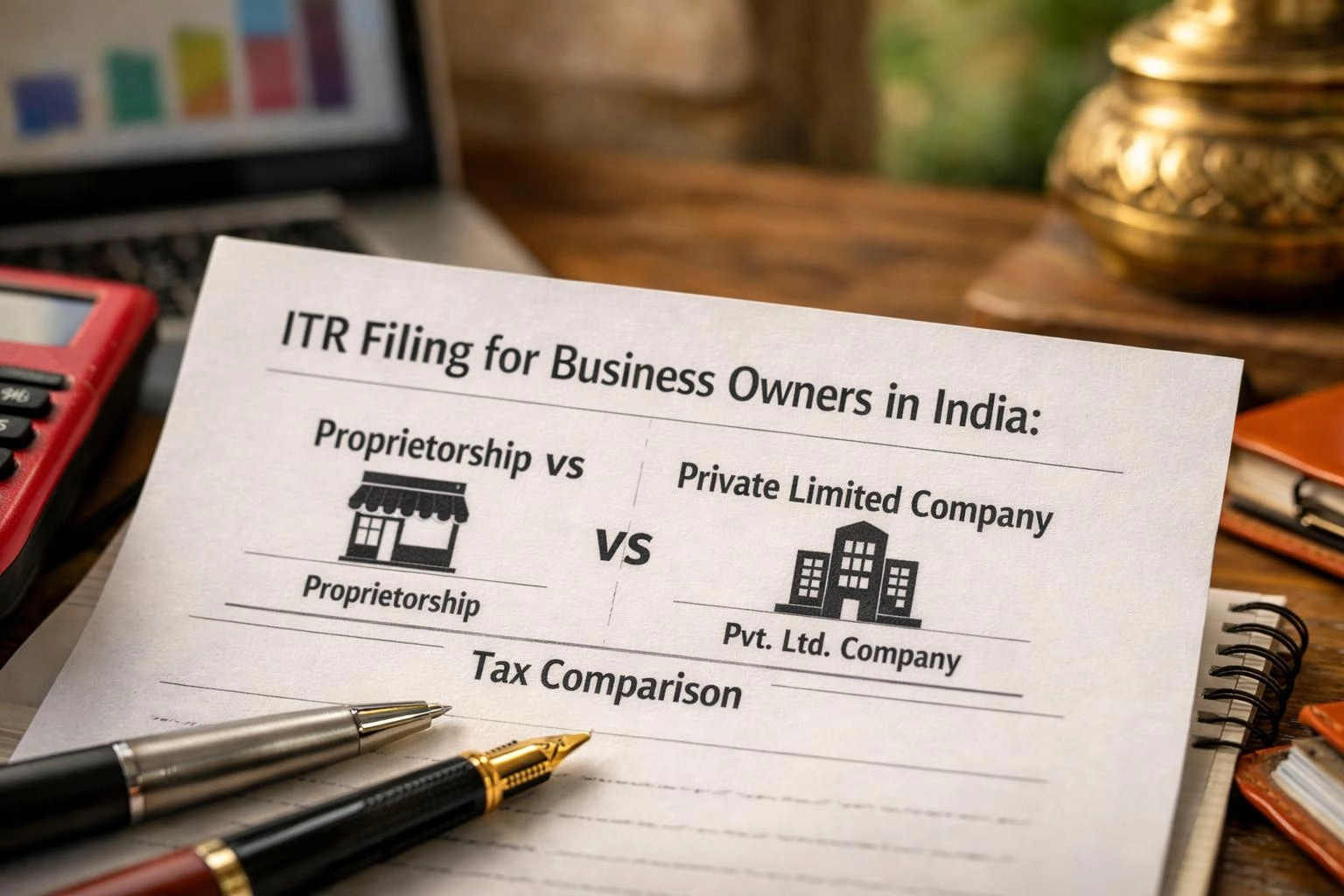
For ITR filing proprietorship vs private limited company India, a proprietorship usually files a simpler individual return and pays tax at slab rates, while a private limited company files a separate corporate return, keeps books, and follows stricter compliance. Choose proprietorship for lower compliance and simpler filing. Choose private limited company for growth, funding, and liability separation. The best option depends on turnover, expense structure, investor needs, and how much compliance you can manage.
Which Business Structure Is Simpler for ITR Filing in India?
Proprietorship is simpler for ITR filing in India because the owner reports business income in an individual return with fewer formal steps. A private limited company is more complex because it must file a separate corporate return, keep statutory books, and meet annual compliance rules.
In practical terms, a proprietorship often suits a small business owner who wants direct control, fewer records, and a faster return filing process. The income gets added to the owner’s personal income tax return, so the final tax slab depends on total business income plus other earnings. That makes deduction planning important, especially when cash flow is tight.
A private limited company is treated as a separate legal entity. Its income is taxed under corporate tax rules, and the company must keep books of accounts, prepare financial statements, and complete ROC filing along with the ITR return. In India, that broader business compliance helps with growth, but it makes the filing process heavier than an individual ITR. For many founders, the choice is really between simple tax compliance and a more structured setup.
Local businesses in India also feel the effect of GST registration, advance tax, and TDS filings. These duties can exist in both models, but the company route usually adds more review and coordination. If you want lower filing friction, proprietorship wins. If you want stronger separation and a cleaner path to scale, the company structure is better.
How Do Tax, Compliance, and Filing Costs Compare?
A proprietorship usually has lower filing and compliance costs, while a private limited company has higher recurring costs due to accounting, statutory filings, and corporate tax compliance. The trade-off is simple. Proprietorship is cheaper to run, but private limited offers stronger separation and easier scaling.
| Factor | Option A | Option B |
|---|---|---|
| Cost | Proprietorship usually has lower income tax filing and bookkeeping costs because one person’s return covers the business. | Private limited company usually has higher recurring costs due to accounting support, corporate return work, and statutory compliance. |
| Timeline | Return filing is often faster if records are simple and there are fewer deductions or tax audit issues. | The process takes longer because books of accounts, board records, and financial statements must be checked first. |
| Maintenance | Basic records, invoices, and expense proofs are usually enough for many small businesses, subject to turnover and tax audit rules. | A company needs regular statutory books, annual filings, and more formal internal records. |
| Best for | Owners who want a simple tax slab approach, fewer annual filings, and direct cash flow control. | Businesses that want limited liability, funding readiness, and a formal structure for growth. |
Quick Comparison of Key Filing Factors
| Factor | Proprietorship | Private Limited Company |
|---|---|---|
| Cost | Lower tax compliance and bookkeeping cost | Higher due to corporate return, audit requirement, and ROC filing |
| Timeline | Usually quicker | Usually longer because of financial statements and review |
| Maintenance | Simpler records and fewer annual filings | Books of accounts, statutory compliance, and annual return filing |
| Best for | Small owner-run businesses | Growth-focused businesses |
Typical filing costs vary by record quality, turnover, and whether a tax audit or GST compliance is needed. A proprietorship can stay lean if business income is simple and deductible expenses are tracked well. A private limited company often needs more support because corporate tax, advance tax, financial statements, and ROC-linked annual compliance all add work.
What Are the Pros and Cons of Proprietorship for ITR Filing?
Proprietorship works well for small business owners who want simple tax filing, direct control, and fewer compliance burdens. Its main downside is clear. The owner and business are legally the same, so liability is unlimited and fundraising or expansion is harder.
For many local service businesses in India, the appeal is easy income tax return preparation with fewer annual filings. The owner reports business income directly, claims valid deductions, and handles advance tax as part of the personal return process. If cash flow is seasonal, this direct model can be easier to manage.
The trade-off is that the business is not separate from the person. That affects risk, investor confidence, and long-term growth. If turnover rises or GST work becomes more complex, the filing burden can still stay manageable, but the structure may start to feel tight. For an owner who values speed and control more than formal scale, proprietorship often remains the practical choice.
Proprietorship Advantages
Proprietorship Limitations
What Are the Pros and Cons of a Private Limited Company for ITR Filing?
A private limited company is better for businesses that need limited liability, professional credibility, and room to scale. Its trade-off is heavier compliance, separate corporate tax filing, board records, and ongoing statutory maintenance that makes ITR filing more involved.
This structure works well when the business expects investors, higher turnover, or a more formal operating model. The company files its own company ITR, keeps books of accounts, and manages ROC filing as part of annual company law compliance. That extra work creates discipline and helps with lending, partnerships, and due diligence.
For Indian businesses, the load is not just tax. GST registration may sit beside TDS filings, advance tax payments, financial statements, and audit requirements. Those moving parts raise compliance cost, but they also create a cleaner record for growth. If your business needs a strong structure more than a simple return filing process, the company format is often the better long-term fit.
Private Limited Company Advantages
Private Limited Company Limitations
Which Option Should You Choose Based on Your Business Stage?
Choose proprietorship if you are a small, owner-run business wanting the lowest filing burden. Choose a private limited company if you plan to raise capital, hire at scale, or separate personal and business risk. The right choice depends on growth plans, compliance tolerance, and tax structure.
Start with your turnover, expense pattern, and how much time you can spend on tax compliance. A small business with simple billing, basic deductible expenses, and no immediate investor need usually benefits from the easier individual ITR route. If your business is moving toward higher turnover, formal payroll, or GST-heavy operations, the company route may make more sense.
Think about the next three years, not just this filing season. If you expect expansion, a lender review, or outside equity, the private limited company model can support that path better. If your priority is cash flow, speed, and less paperwork, proprietorship remains the simpler tax compliance option. In India, where local compliance simplicity matters for many founders, the right answer is often the one you can maintain consistently.
If you are unsure, compare your expected deductions, advance tax planning, and audit requirement before deciding. For many owners, the best structure is the one that balances tax slab exposure, filings, and future growth without creating avoidable stress.
Frequently Asked Questions
Related Resources
Signs Your Business Needs Professional ITR Filing in India
signs you need business tax filing service
When You Need ItSigns Your Company Needs Corporate Tax Return Filing Help in India
signs you need corporate tax return filing India
When You Need ItSigns Your Business Needs Annual Income Tax Compliance Help in India
signs you need annual income tax compliance help India
How It WorksHow Business ITR Filing Works in India: A Step-by-Step Guide
business ITR filing process India