Signs Your Company Needs Corporate Tax Return Filing Help in India
Your company needs corporate tax return filing help in India when tax deadlines keep slipping, books and returns do not match, and notices from the income tax department start piling up. It also helps when deductions are claimed the wrong way or your team lacks tax know-how. These signs usually mean more compliance risk, avoidable penalties, and filing errors. A professional filing service helps businesses file accurate corporate tax returns, cut mismatches, and stay compliant with Indian tax rules.
company corporate tax return filing help in India is needed when warning signs of compliance risk, filing errors, and in-house tax capacity gaps start to show. In simple terms, your business ITR return filing is no longer routine, and your income tax return process needs expert control before mistakes turn into tax notice problems.
For many Indian companies, the issue is not one big failure but a pattern. A filing deadline slips, reconciliation gets rushed, and disclosures are checked at the last minute. That pattern often leads to avoidable penalties, revised return work, and extra pressure on the finance team. In India, the annual return cycle brings strong deadline pressure, so missing the due date is often the first local warning sign.
The safest response is to treat corporate tax return filing as a compliance process, not a year-end scramble. If your books of accounts, financial statements, GST returns, and TDS records are not aligned, the return gets harder to defend during scrutiny. Strong return preparation reduces risk and keeps the filing workflow steady.
What Are the Clearest Signs Your Company Needs Corporate Tax Return Filing Help?
A company needs corporate tax return filing help when it cannot file accurately, on time, or with confidence. Common warning signs include missed due dates, repeated errors, notices from the income tax department, weak bookkeeping, and confusion about deductions, reconciliations, or audit-linked disclosures.
These signs matter because they show the return is being prepared under strain, not with control. A company may still file on time, but if the process depends on rushed checks, the risk of error rises. In India, cross-verification across income tax filings, TDS records, and GST reporting is common, so one weak link can affect the whole submission.
Missed Filing Deadlines and Last-Minute Tax Preparation
A missed due date is one of the clearest signs that your corporate income tax process needs help. If the tax compliance calendar is being managed reactively, your team may be relying on late document collection, hurried review, and incomplete return validation. That often raises the chance of a penalty, avoidable errors, and a rushed revised return later.
In India, many companies only feel the pressure once the filing deadline is close and the year-end books are still open. If the finance team keeps pushing tax work into the final days, the return may be filed with weak checks or missing support. That is a strong sign to bring in corporate tax return filing help before the next cycle starts.
Mismatch Between Books, GST Records, and Income Tax Data
If your books of accounts do not match your GST returns or the figures in the income tax return, the business needs stronger reconciliation. These mismatches often point to gaps in financial statements, wrong mapping of revenue, or uneven treatment of expenses. Even a private limited company with healthy operations can face compliance risk when source records are not aligned.
Indian tax filing depends heavily on document reconciliation. When GST, TDS, and accounting records tell different stories, the return becomes more vulnerable to scrutiny. A careful review of books of accounts, financial statements, and GST returns before filing can prevent errors that later trigger a tax notice.
Which Filing Mistakes Usually Show That Your Team Needs Expert Support?
Filing mistakes signal the need for expert support when they repeat across tax seasons or trigger notices, delays, or revisions. Common mistakes include wrong income classification, missed disclosures, TDS mismatches, incorrect deduction claims, and incomplete support records that make the return vulnerable.
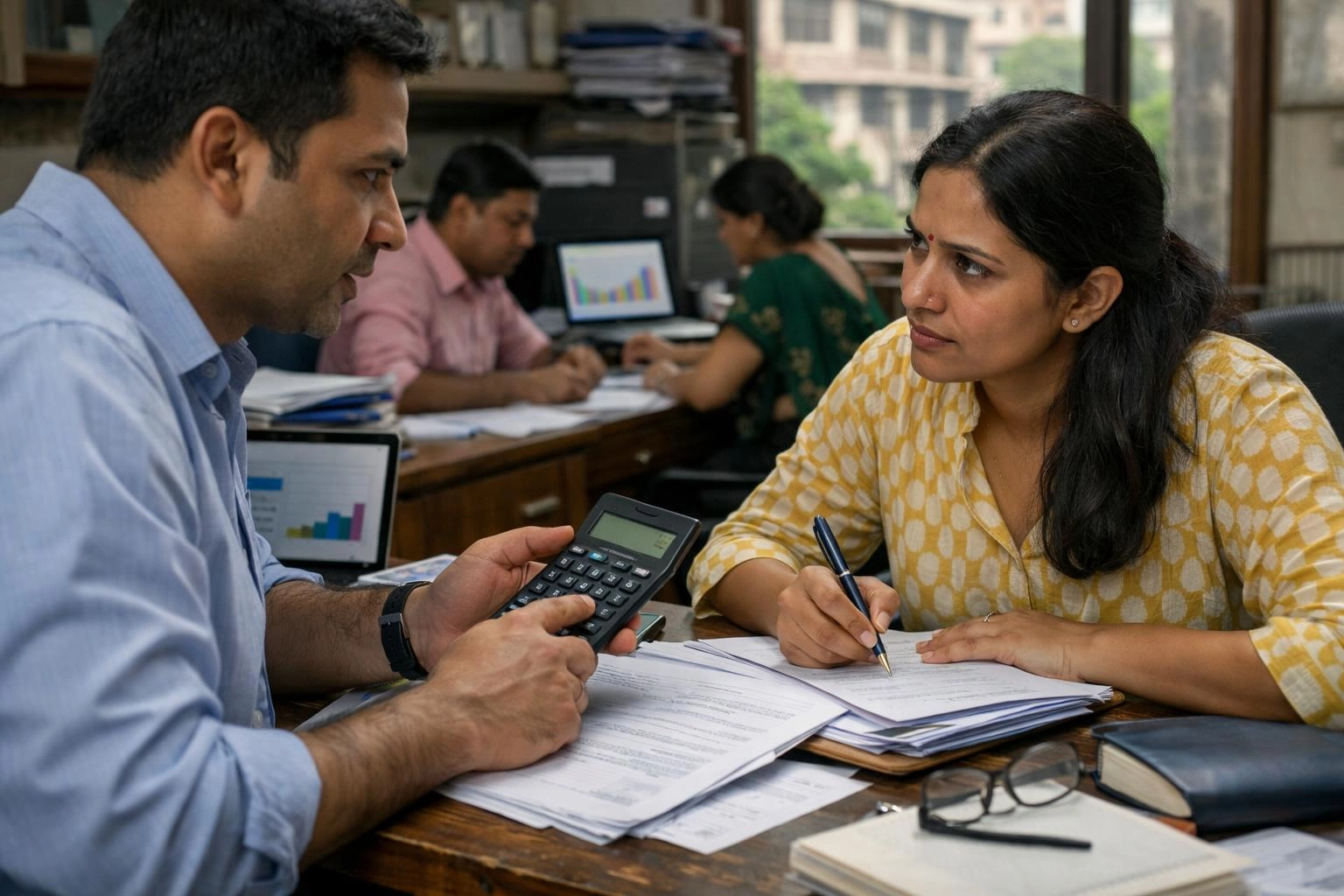
When these problems repeat, they usually show process weakness rather than one-time oversight. The business may still be filing, but not with enough review discipline. In India, where notices, scrutiny, and assessment follow-ups can arise from small inconsistencies, a recurring compliance error is a strong signal that the company needs tax return filing support.
Repeated Notices, Revisions, or Delayed Responses from Tax Authorities
Repeated income tax notice letters, revised return filings, or slow responses during scrutiny are signs that your filing process is not stable. If assessments keep asking for the same records, the company may be missing disclosures, keeping weak backups, or filing with unresolved TDS mismatch issues. That creates avoidable stress for the finance team.
Repeated follow-up from tax authorities usually means the original return was not prepared with enough care. A revised return can fix some errors, but it also shows the first filing did not fully meet the compliance standard. Better pre-filing review, document reconciliation, and faster response discipline reduce assessment risk.
In-house Finance Teams Are Overloaded or Lack Tax Specialization
When the finance team is overloaded, corporate tax work often gets squeezed between payroll, vendor payments, audits, and reporting. If no one on the team is a true tax expert, the filing may depend on partial knowledge and hurried checks. That is where outsourced filing becomes useful, especially when compliance work keeps growing.
Many Indian businesses can manage accounting in-house but still need business tax filing assistance for return preparation, review, and filing control. The risk is not only speed. It is also the lack of specialization. A team that is already stretched may not have time to catch filing errors before submission.
DIY vs Professional Corporate Tax Return Filing: Which Is Safer for Your Business?
DIY filing can work for very simple cases, but professional corporate tax return filing is safer when your company has multiple income streams, TDS issues, reconciliations, notices, or deadline pressure. A professional reduces filing errors, improves compliance, and helps prevent costly mismatches.
| Factor | DIY | Professional |
|---|---|---|
| Accuracy | Works for simple returns, but errors rise when records are messy or disclosures are missed. | Better review depth, stronger return validation, and fewer avoidable mistakes. |
| Risk management | Higher compliance risk if the team is learning while filing. | Structured checks help reduce tax notice exposure and revision needs. |
| TDS reconciliation | Often delayed or incomplete, especially near the filing deadline. | Handled with document reconciliation and cross-checks before submission. |
| Books and records | Depends on internal discipline and may miss gaps in books of accounts or financial statements. | Reviews books of accounts, financial statements, GST returns, and support files together. |
| Best fit | Very small, low-complexity filings with clean records. | Private limited company filings, growing firms, and cases with audit, notices, or multiple transactions. |
For risk management, professional filing is usually the safer option when the company wants consistency across company ITR filing, corporate return preparation, and revised tax return filing if needed. It also helps protect against the common problem of filing based on partial information rather than complete records.
When Outsourcing Becomes the Better Option for Indian Businesses?
Outsourcing becomes the better option when the corporate tax filing service can handle scale, check records properly, and keep the company on track through the annual cycle. For an SME or a private limited company, that matters when internal staff are busy, the filing calendar is tight, or the business wants reliable business tax filing assistance without adding permanent headcount.
Outsourced tax filing is especially useful when returns require document reconciliation, TDS review, or response support for notices. It helps the business move from reactive compliance to planned tax compliance services, which lowers pressure on the internal team and improves filing confidence.