Skip to content

After Filing an ITR: Late Returns, Corrections, Revised Returns and Refunds in India

Taxpayers in India can file belated, revised, or corrected ITRs to fix mistakes or missed deadlines. If refunds are delayed, they can check status and request reissue. Expert help can support compliance and faster income tax refund processing.

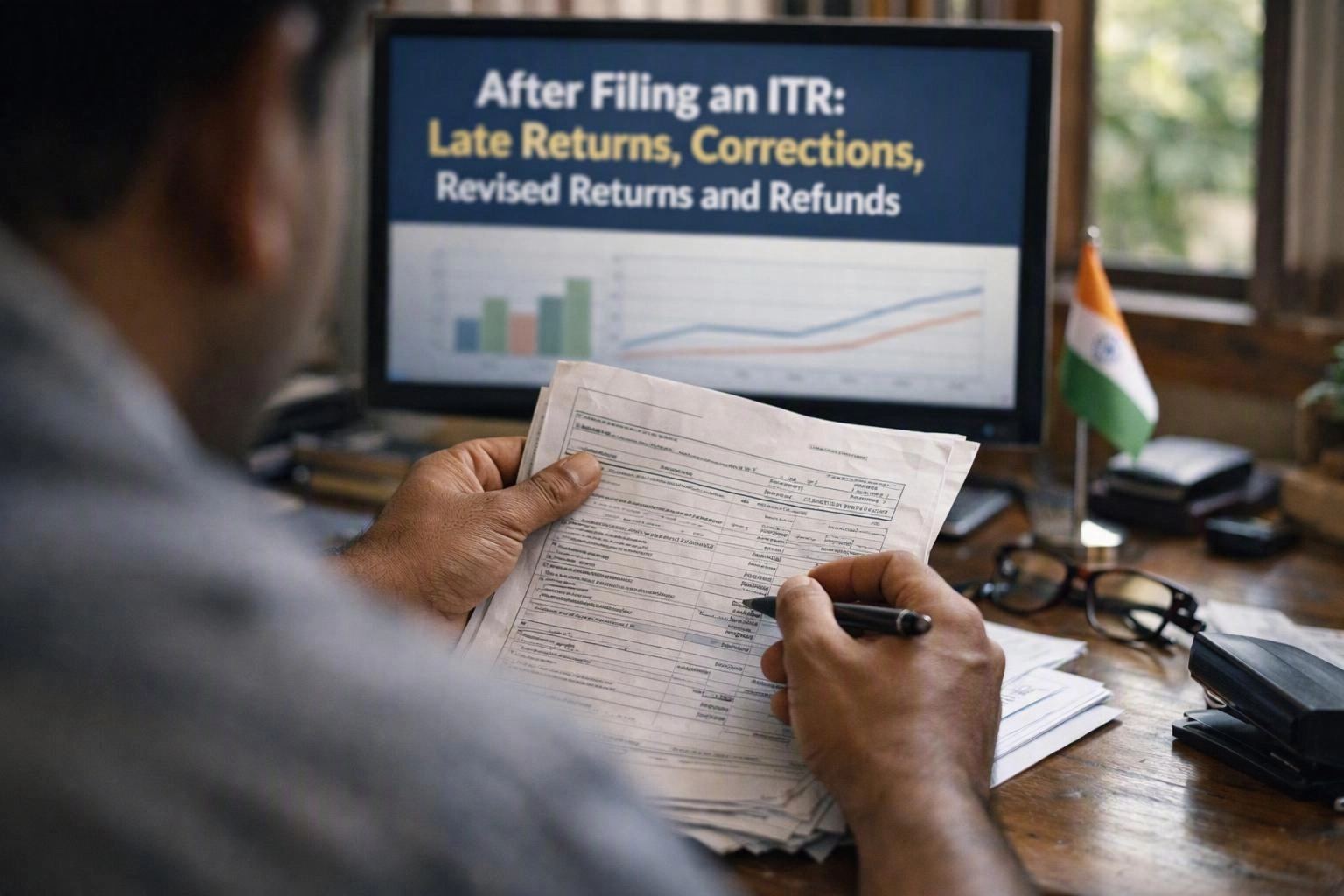
Taxpayer reviewing belated return, revised return, and refund status documents

We help taxpayers deal with missed deadlines, return corrections, revised filings, and refund issues under Indian tax rules. Our team works with salaried people, professionals, business owners, and others who face problems after filing an income tax return.

This page explains Late ITR Filing, correction of filed details, revised tax filing, refund tracking, and taxpayer verification on the e-filing portal. It also covers local deadline rules, the need to pick the right ITR forms, and the usual refund steps followed by the income tax department.

If you are comparing options and want to know what we do, the answer is simple. We focus on fixing post-filing tax return problems clearly and lawfully, with care for the right assessment year and return record.

Understanding Late, Revised, and Corrected Income Tax Returns in India

Late ITR filing, revised ITR filing, and income tax return correction allow taxpayers in India to comply with tax laws by submitting returns after deadlines, fixing errors, or updating filed returns to ensure accurate tax reporting.

A return filed after the original due date is commonly called a Belated Income Tax Return. It helps when a taxpayer misses the deadline but still wants to report income and claim eligible deductions. Timing matters a lot. Missing the legal timeline can lead to penalties, interest, and trouble during loan checks, notices, or refund review.

A revised return is different from a belated return. It is used when a taxpayer has already filed but later finds a mistake. Common issues include wrong income figures, missed TDS entries, incorrect bank details, omitted deductions, or incomplete schedules in the ITR form. Revised ITR Filing replaces the earlier return with updated and correct data.

Income Tax Return Correction is the wider idea that covers both formal revision and practical correction steps. Sometimes the issue is not just a number. A taxpayer may choose the wrong ITR form, enter PAN, Aadhaar, or bank details wrongly, or miss taxpayer verification after filing. India uses different ITR forms, and the wrong one can make a return defective or unsuitable.

In daily use, people may call this tax return correction, late tax filing, or revised tax filing. The goal stays the same. You need to correct records with the income tax department and reduce future problems. Our Late ITR Filing Help in India is often used with filing review, form checks, and refund follow-up.

Where needed, we also check whether ITR Filing used the right form, correct figures, and proper portal validation. That helps support smoother tax refund processing.

How to File a Belated Income Tax Return and Its Deadlines?

A belated income tax return can be filed in India after the original deadline but before the end of the relevant assessment year, enabling taxpayers to report income and avoid penalties for late filing.

1
Confirm eligibility by checking whether the assessment year is still open for filing a belated return. India follows strict time limits, so the e-filing portal may block normal late filing after the allowed period ends.
2
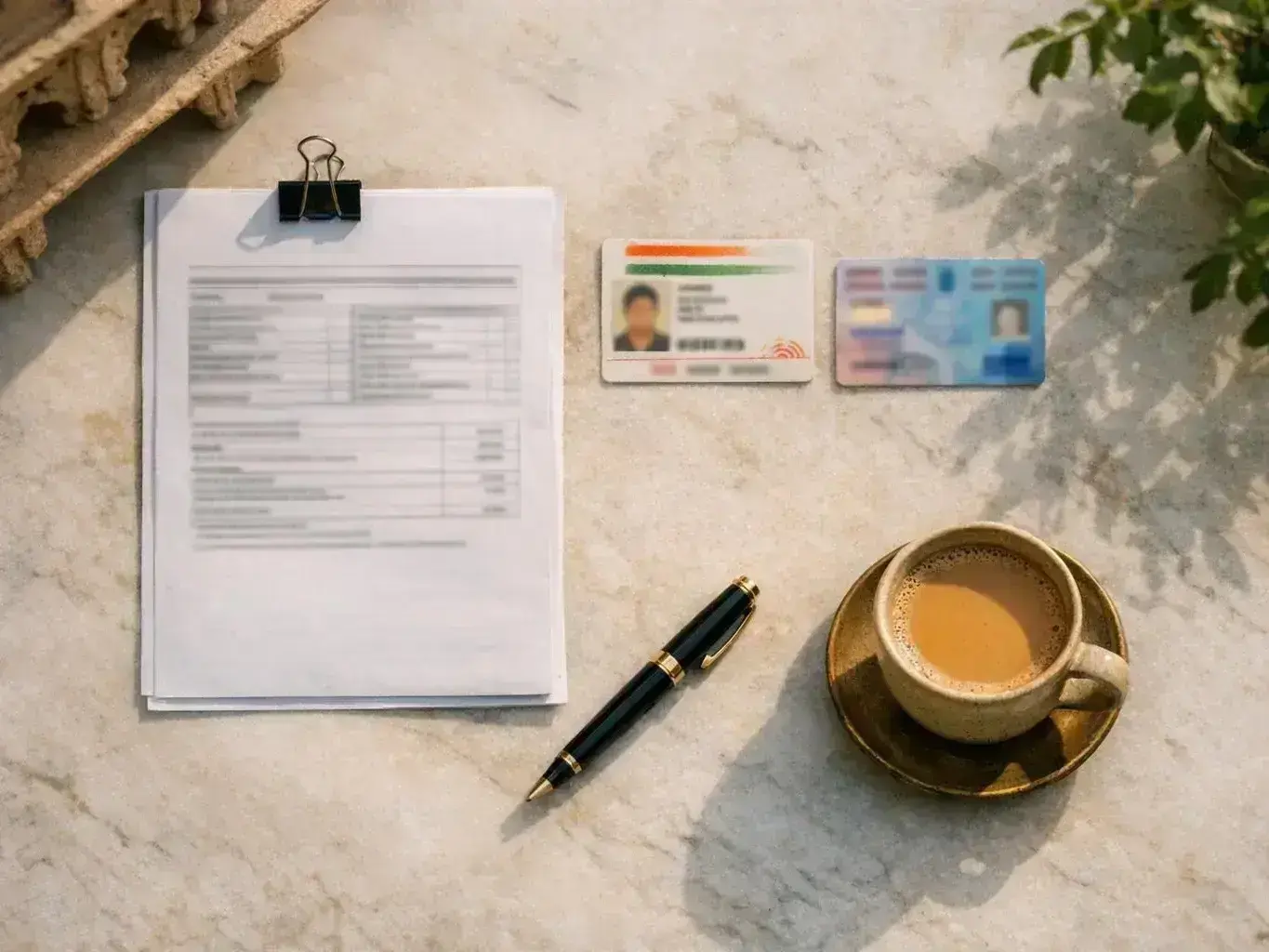
Collect records such as Form 16, AIS, TIS, interest certificates, capital gains statements, deduction proofs, and bank details. These records help reduce mismatch risk with the income tax department.
3
Choose the correct ITR form for your income type. This matters in India because different ITR forms apply to salary, house property, capital gains, business income, and presumptive income.
4
Log in to the e-filing portal and start a fresh income tax return for the correct assessment year. Select the belated return option if the system shows it.
5
Enter income, deductions, tax payments, and exempt income carefully. Check TDS credits, self-assessment tax, and carry-forward treatment, because late filing can affect some loss claims.
6
Review the computation for tax penalties, late fee, and interest if applicable. The amount depends on income level, tax payable, and the length of delay.
7
Submit the return and complete taxpayer verification through an allowed online or offline method. A return that is filed but not verified may stay incomplete for processing.
8
Save the acknowledgement and monitor the filing status. If the portal shows a mismatch or defect, act quickly to avoid more compliance issues.

Steps to File a Revised or Corrected Income Tax Return

To file a revised or corrected ITR in India, taxpayers must submit the updated return before the assessment year ends, correcting mistakes or wrong form submissions to ensure accurate tax records and avoid penalties.

After Filing an ITR: Late Returns, Corrections, Revised Returns and Refunds
1
Identify the exact error before you start. It may be a data mismatch, a missed deduction, an omitted bank account, or the wrong ITR form.
2
Check whether revision is still allowed for the relevant assessment year. Indian rules are deadline-based, and the revision window does not stay open forever.
3
Download or review the filed return acknowledgement, computation, AIS, TIS, Form 26AS, and supporting documents. These records help show whether the issue is in income reporting, tax credit, or disclosure schedules.
4
Log in to the e-filing portal and select the revised return option. Enter the original acknowledgement details if required, so the system links the update to the earlier filing.
5
Correct all affected fields, not just the most obvious one. If salary changes, deductions, total income, tax payable, and refund amount may also change.
6
If you filed the wrong ITR form, choose the correct form for your actual income profile. In India, form choice depends on salary, house property, capital gains, foreign assets, business income, and other reporting categories.
7
Review whether the department has already issued a defect notice or correction request. If yes, follow the notice terms instead of guessing the right next step.
8
Submit the revised return and complete verification. Without taxpayer verification, the revised record may not move into active processing.
9
Track the updated status after submission. Refund amount, demand, or processing outcome may change after the corrected data is accepted.
10
If the return includes business income, capital gains, foreign assets, or repeated mismatches, get help before refiling. These cases often need more than a simple edit.

How Do I File a Revised ITR After Making a Mistake?

You file a revised return by reopening the case on the portal, linking it to the original acknowledgement, correcting the mistake, and verifying the updated return within the allowed deadline for that assessment year.

How Do I Correct an Income Tax Return?

You correct an income tax return by identifying whether the issue needs a revised return, a response to a notice, or a separate update such as bank validation. The safest approach is to fix the full record, not just one visible error.

What Should I Do if I Filed the Wrong ITR Form?

If the wrong ITR form was used, review your income sources and submit a corrected return using the proper form within the allowed revision period. Wrong-form cases can affect processing, deductions, and refund outcomes, so they should be addressed quickly.

Common Reasons for Income Tax Refund Delays and How to Resolve Them

Income tax refund delays in India often occur due to mismatched data, incomplete verification, or processing backlogs. Taxpayers can track refund status online and request reissue if necessary to receive their due refunds.

Income Tax Refund Assistance is often needed when a return seems correct but the refund has not arrived. The most common reason is mismatch. TDS claimed in the return may not fully match Form 26AS, AIS, or the employer or deductor record. When tax credit does not match, the refund may be held back or reduced.

Another common issue is incomplete taxpayer verification. A submitted return that has not been verified may not move to final processing. Many people miss this step. Bank account validation problems are also common, and they can block the refund even after approval.

There are also local process issues in India’s system. Refund timelines depend on successful return processing on the e-filing portal and banking checks after that. At busy times, tax refund processing can take longer because of backlogs, heavy filing volume, review, or correction cycles.

Other causes include an old address or email record, prior year demand, mistakes in personal data, and use of the wrong return form. Even a small mismatch can change the refund result. We often see taxpayers wait too long when a simple fix could have moved the case forward sooner.

To resolve a delay, first check the portal status, bank validation, and processing messages. Then compare the filed return with AIS, TIS, and tax payment records. If the refund was issued but not received, a refund reissue request may be needed. If the return itself is wrong, a revised return or correction step may be the better path.

Common refund issue Typical result Usual next step
TDS or tax payment mismatch Refund held, reduced, or adjusted Compare return with Form 26AS, AIS, and challans
Return not verified Processing may not complete Finish verification on the portal
Bank account validation problem Refund fails or cannot be credited Prevalidate or update bank details and request reissue
Wrong or incomplete ITR form data Defect, delay, or revised computation Review correction or revised filing options

Checking and Requesting Reissue of Income Tax Refunds in India

Taxpayers in India can check income tax refund status via the Income Tax Department’s portal and request a refund reissue if the original refund is lost or not received, ensuring timely resolution of refund issues.

1
Check refund status on the e-filing portal using your login and the relevant assessment year. Look for messages that show whether the return is processed, refund determined, issued, failed, or adjusted.
2
Review the refund status reports and any message from the department. These often explain if the delay is due to verification, bank validation, mismatch, or prior demand adjustment.
3
Confirm bank details including account number, IFSC, account type, and prevalidation status. Many refund failures happen because the approved account is inactive or has not passed validation checks.
4
If the portal shows the refund was issued but not received, open the refund reissue function. Then submit the request with the correct bank account information.
5
Recheck whether the return itself has any unresolved error. If the refund amount depends on corrected income, TDS, or deductions, a revised return may be needed first.
6
Monitor the reissue request after submission. India-specific processing often includes portal updates and bank-stage completion, so allow some time before you escalate.
7
Keep acknowledgement copies, processing intimation, and bank validation records ready. These documents help if you need follow-up support for refund tracking or further correction.

When You Need Both Late ITR Filing and Income Tax Refund Assistance?

Taxpayers may require both late ITR filing and refund assistance in scenarios such as missing the original filing deadline, discovering errors post-filing, receiving delayed refunds, filing wrong ITR forms, or needing expert consultation for complex cases.

Missed filing deadline and you now need to submit a belated return while also checking whether excess TDS or advance tax can still lead to a refund.
Error found after filing such as wrong income, missed deduction, or tax credit mismatch, and the correction affects the expected refund amount.
Wrong ITR form used and the return must be corrected because the incorrect form has delayed or disrupted normal refund processing.
Your return was filed and verified, but the refund has not been received due to bank validation issues, processing delay, or refund failure.
Your case involves multiple years, notices, self-assessment tax, business income, or other facts where a simple do-it-yourself fix may not fully resolve the compliance and refund position.

When these issues overlap, one problem often causes the other. A late filing may slow processing, and a flawed return may block the right refund result until the record is corrected.

Contact our team for tailored filing and refund support

Questions About ITR Filing in India

+91 93140 76998