Understanding the Benefits of Income Tax Return Filing for Salaried Individuals
Filing Income Tax Returns enables salaried individuals to claim tax refunds, maintain financial records, ensure compliance, and access financial services, providing both legal and monetary benefits.
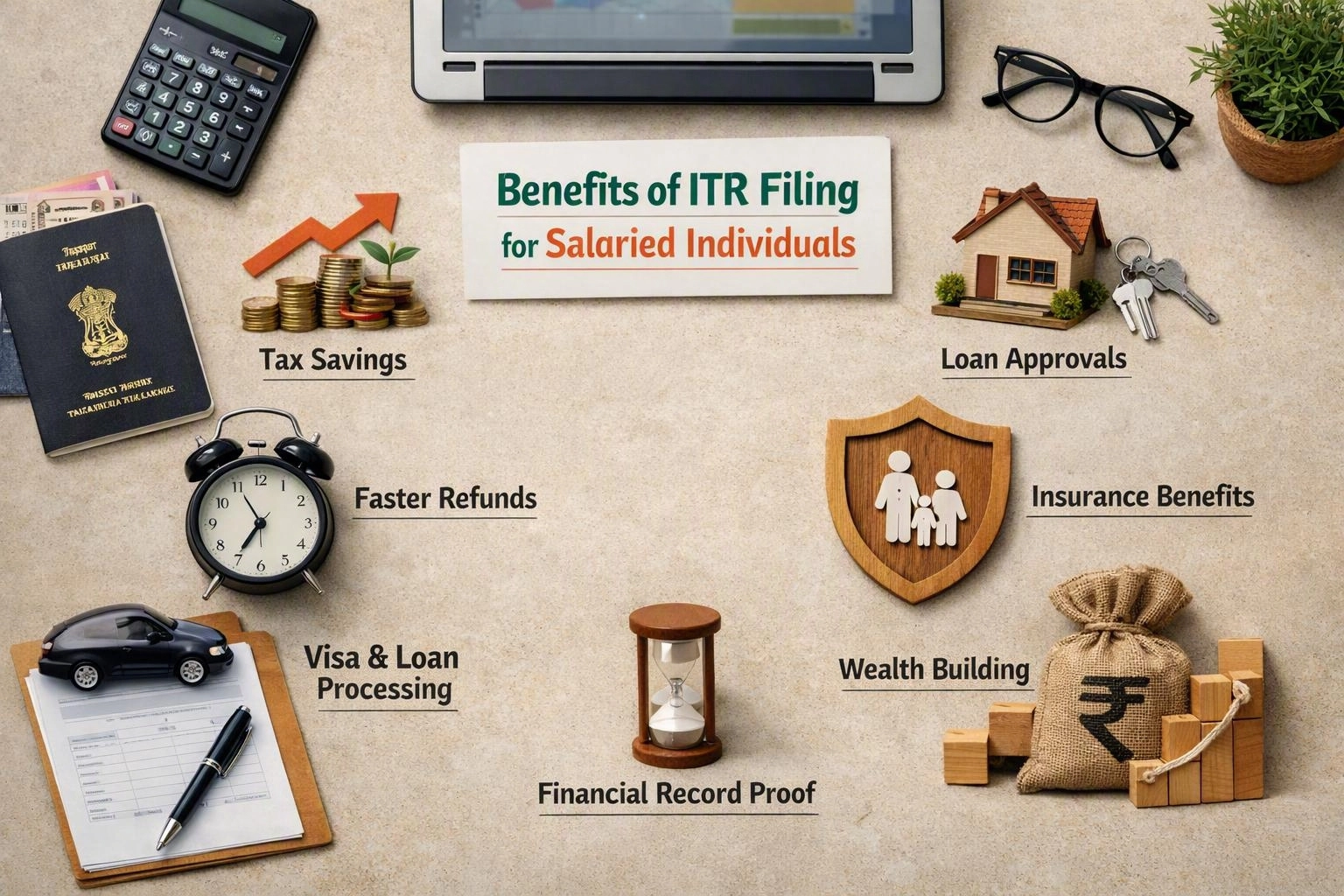
ITR Filing for Salaried Individuals provides multiple financial and legal benefits. For employees, a properly filed income tax return creates a clear record of earnings. It supports a tax refund claim and shows your tax duties were met after TDS deductions by an employer.
Many salaried people assume tax deducted at source means no more action is needed, but TDS is only one part of the process. A filed return helps match salary income, tax deduction, exemptions, and other tax documentation with the tax department record. It also gives you a formal income tax declaration for banks, visas, and other financial services later.
Why Salaried Individuals Should File Income Tax Returns?
ITR Filing for salaried individuals is essential for tax compliance, enabling them to document income, claim refunds, and avoid penalties, thereby securing their financial and legal standing.
A salary slip and Form 16 do not replace a completed income tax return. For a salaried individual, filing creates an official tax return filing record. It shows annual income, deductions, and taxes already paid through TDS. This matters if employer deductions were too high, if you earned bank interest or freelance income, or if you changed jobs.
It also helps prevent future problems. If the tax department finds a mismatch in tax form details, bank interest, or income reporting, a filed return helps you explain it. Filing on time also lowers the chance of a tax penalty from missed deadlines or non-reporting. In simple terms, it helps you keep Legal Compliance and organised financial records.
Core Benefits of ITR Filing for Salaried Individuals
ITR Filing offers salaried individuals benefits such as tax refunds, proof of income, eligibility for loans, and avoidance of legal penalties, all of which enhance their financial stability and credibility.
For most employees, filing is about more than following a rule. It turns salary records, TDS entries, and deductions into a full tax return filing history. That record can help in many real-life situations. A well-prepared return supports refund processing, strengthens financial records, and clears up differences in salary, bonus, interest, or investment details.
It also helps you use tax deductions the right way. If your employer missed some valid declarations during payroll. Your income tax declaration may still include them at filing time. That depends on the rules and your documents. Careful tax documentation matters here, and accurate reporting can improve refund outcomes and lower mismatch notices.
Another major benefit is credibility. Banks and lenders often ask for recent returns when reviewing Tax Refunds, income stability, and repayment ability. Clear yearly records matter. Loan decisions often depend on both current salary and a steady income history on paper.
Filing also gives you a clear path if you need changes later. If a mistake shows up after submission, Income Tax Return Correction allows updates through a return correction process. This helps with bank details, deduction claims, income figures, or missed disclosures. Timely correction can stop a small tax audit concern from becoming a bigger issue.
Many readers also need help with a delayed refund or a mismatch. In that case, Income Tax Refund Assistance usually means checking status, confirming tax form details, and verifying bank information. It may also involve replying to tax department queries the right way. For people handling ITR Filing for Salaried Individuals in India, this support can save time and avoid simple mistakes.
Claiming Tax Refunds
A filed return is the formal way to recover excess tax paid. This often happens when TDS deducted by an employer is higher than the final tax liability. Deductions, exemptions, or losses can change the final amount. Salaried taxpayers who check salary entries and bank interest closely are more likely to spot overpaid tax and file a proper tax refund claim. Even small mismatches can lead to refund amounts that help with monthly budgeting. Correct bank details and timely verification often help the refund move faster.
Maintaining Proof of Income
An acknowledged return acts as dependable proof of annual earnings. Payslips show monthly salary, but a filed income tax return shows a fuller picture. It combines salary, other income, deductions, and tax paid. This creates stronger financial records than separate papers. Lenders, landlords, and visa reviewers often prefer one to three years of filed returns because they show consistency.
Facilitating Loan and Credit Approvals
Returns often support faster review during loan or credit checks. Lenders use them to verify declared salary, review existing obligations, and judge repayment capacity. For a salaried person, this can improve loan eligibility. The return is usually treated as stronger financial documentation than self-stated income alone. When records stay consistent, applicants often face fewer follow-up questions and smoother processing.
Avoiding Legal Penalties and Notices
Timely filing reduces the chance of penalties, interest exposure, and compliance notices. If taxable income crosses the required limit. Missing the tax filing deadline can create avoidable costs. It can also bring extra scrutiny. Even if taxes were deducted at source, mismatches between employer data, bank interest, and your final submission may still lead to queries. Filing accurately and on time is the easiest way to keep records clean.
Enabling Income Tax Refund Assistance
Once a return is filed, refund assistance becomes much easier because the record is already in the system. Support usually includes checking refund status, finding mismatches, confirming account details, and replying to tax department requests. This matters when refunds are delayed due to verification issues or TDS differences. Many cases are resolved by reviewing the filed return, tax form data, and supporting documents. Good help protects valid refund amounts and reduces stress.
Measurable Outcomes of Timely ITR Filing
Timely ITR Filing leads to measurable outcomes such as higher refund rates, reduced penalties, and improved loan approval chances, directly benefiting salaried individuals financially.
For most employees, filing on time improves record accuracy and cuts avoidable delays. Exact results can vary, but the usual pattern is clear. You may see faster processing, fewer notices, and stronger records for lenders or other financial services. Verified yearly income often makes later checks much easier.
| Area | If filed on time | If delayed or missed | Typical outcome range |
|---|---|---|---|
| Refund processing | Smoother review when details match | More chances of mismatch follow-up | Often faster when verification is prompt |
| Penalty exposure | Lower risk of late filing costs | Higher chance of interest or penalty | Typically reduced significantly with timely filing |
| Loan assessment | Clearer proof of income history | Extra document requests are more common | Often stronger approval confidence with 1-3 years of returns |
| Notice risk | Lower when salary, deductions, and bank data align | Higher if records are incomplete or inconsistent | Typically fewer avoidable queries with accurate filing |
How to Correct Income Tax Returns Efficiently?
Income Tax Return Correction allows salaried individuals to rectify errors in filed returns. Ensuring accurate tax records and preventing penalties through a straightforward amendment process.
If you notice an error after submission, act quickly. A return correction is usually manageable if you identify the mistake clearly. Gather the right records and revise the return before it creates a bigger compliance or refund problem.
If the issue involves TDS mismatch, job changes, or missed deductions, our team can help review the amendment path and supporting records before resubmission.
Common FAQs About ITR Filing for Salaried Individuals
Frequently asked questions about ITR Filing for salaried individuals cover eligibility, deadlines, benefits, correction processes, and refund timelines to clarify common concerns.
Questions About ITR Filing in India
Related Resources
The ITR Filing Checklist, Documents to Gather Before You Start.
documents required for ITR filing in India
What It SolvesIncome Tax Refund Delayed or Not Received? Find the Problem
income tax refund not received or delayed India
What Goes With ItAfter Filing an ITR, Late Returns, Corrections, Revised Returns and Refunds.
Late revised corrected ITR and income tax refund assistance India.