Income Tax Refund Delayed or Not Received? Find the Problem in India
In India, income tax refunds may be delayed or not received due to processing errors, incorrect bank details, or validation failures. Taxpayers can check refund status online via the Income Tax Department portal and request reissue if needed. Common causes include mismatched bank accounts and return discrepancies. Correcting errors through income tax return correction and consulting tax experts can help speed up refund receipt.
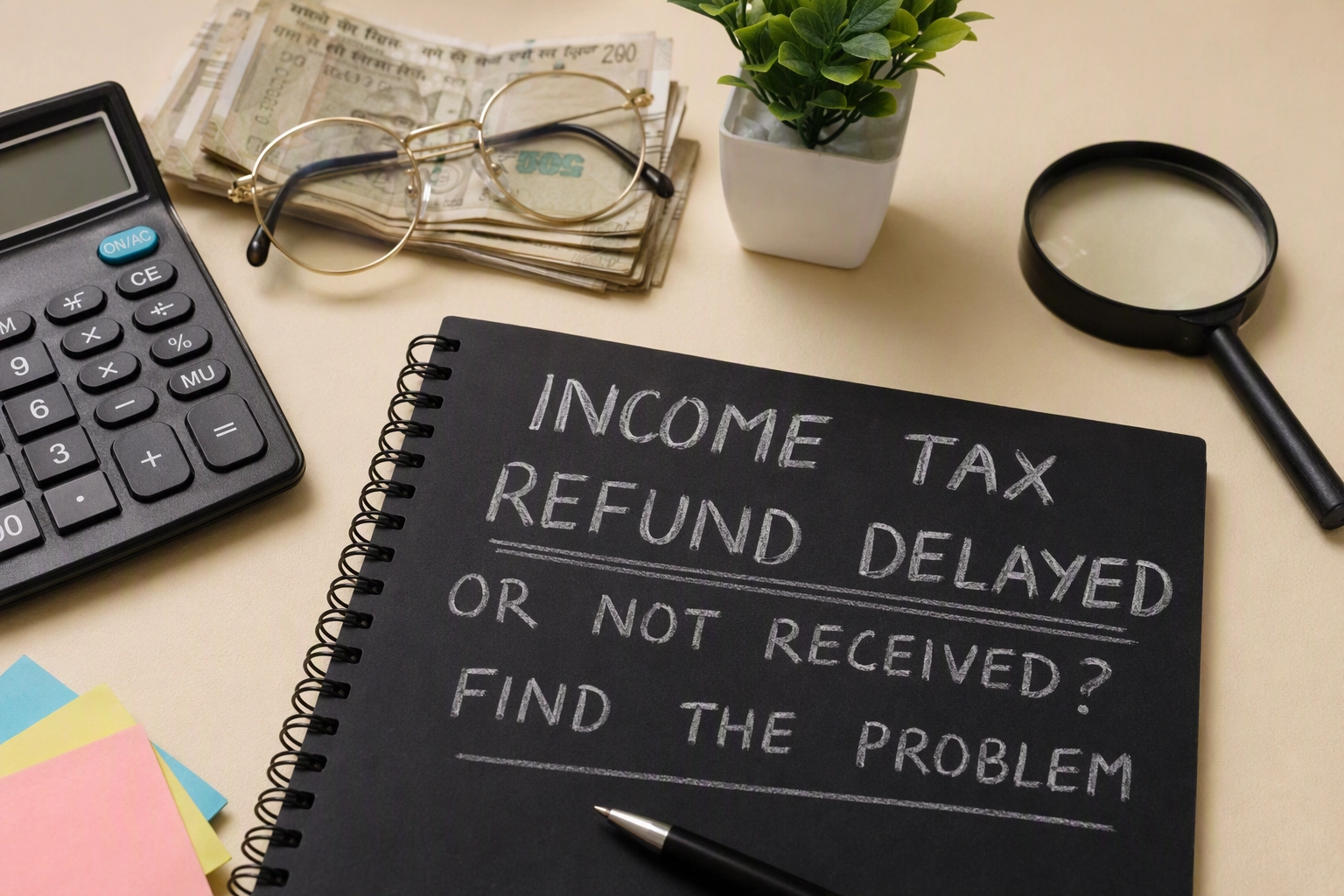
A delayed Income Tax Refund usually means a processing hold, a mismatch in your return, or a bank payment issue. If you have not received your tax refund, first check the refund tracking record using your PAN number and assessment year. Then confirm that your bank account is pre-validated and linked correctly.
This page explains the common refund delay causes and how the Indian PAN-based refund tracking system works. It also shows when to seek Income Tax Return Filing support. We also cover how to fix errors through rectification or a refund reissue application. Local workload can matter too, because some Income Tax Offices move slower than others.
Why Has My Income Tax Refund Not Been Received or Is Delayed?
Income tax refund delays in India occur due to processing backlogs, mismatched bank account details, or errors in the filed return. The refund may also be held if the bank account is not validated or if discrepancies exist in the tax return.
If your refund has not arrived, check these signs before you act. They often show if the issue is processing, payment, or return data. That makes the next step much clearer.
If you want help reading those status messages, our team can review your filing trail. We’ll help you understand the issue. Then we’ll guide you to the right next step through Income Tax Refund Assistance in India.
How to Check Your Income Tax Refund Status in India?
Taxpayers in India can check their income tax refund status online through the official Income Tax Department website by entering their PAN and assessment year details.
To check your income tax refund status, sign in to the e-filing system and open the filed returns or refund section. Select the relevant assessment year. The portal uses the PAN-based refund tracking system used in Indian tax administration. Your PAN card details and return record must match exactly. This is the most direct answer to the question, “How do I check my ITR refund status?”
After login, read the status message carefully. You may see return under processing, refund determined, refund issued, refund failed, or no demand no refund. Each label points to a different action. If the record shows issued but no amount reaches your account, verify the selected bank details. Also check that the account is active and pre-validated. If it shows failure, a refund reissue application may be needed.
Keep your assessment year, acknowledgment number, and bank details ready. If you filed recently, allow some time for system updates. Refund tracking can lag behind filing confirmation. Taxpayers who used ITR Filing support should also compare filed data with TDS records. That helps catch hidden tax return discrepancies. We often help clients read portal messages that seem simple but actually point to a correction, demand response, or payment reissue.
Common Causes of Income Tax Refund Delays and How to Prevent Them
Common causes of income tax refund delays include incorrect bank details, unvalidated bank accounts, and errors in the income tax return. Preventive measures involve verifying bank details, validating accounts with the Income Tax Department, and filing accurate returns.
The most common answer to “What causes an ITR refund to be delayed?” is a mismatch between return data, payment details, and bank validation. Small data errors can cause delays. Refund release depends on both tax processing and successful bank credit.
Below are the main refund delay causes that affect taxpayers most often.
Prevention starts before submission. Most delays can be reduced if you check the return and payment details carefully. A few extra minutes can save a long wait.
Processing speed can also differ by case type and local workload. Some taxpayers get quick release. Others wait longer because of regional backlogs or pressure on local assessment units. That does not always mean something is wrong, but if the status does not change for a long time, review the filing and payment trail.
What to Do if Your Bank Account Is Not Validated for Income Tax Refund?
If your bank account is not validated, the refund cannot usually be credited until the account is pre-validated and linked properly on the portal. This directly answers the question, “What if my bank account is not validated for an income tax refund?”
First, log in and check if the account is active, in your own name, and linked to your PAN card records. Then confirm the IFSC, account number, and account type. If the validation request is pending, wait for the bank response and check again. If validation fails, remove the wrong account and add the correct one again. Sometimes name mismatch, inactive accounts, or joint account issues block approval.
After validation is complete, check whether the refund was already issued and failed. If yes, you’ll usually need to submit a fresh refund reissue application. That lets the payment go to the validated account. If the return is still under processing, the system may use the corrected bank record automatically. Our team often handles this as part of Income Tax Return Correction support when a bank mismatch appears with filing errors.
How to Request a Reissue of Your Income Tax Refund?
If your income tax refund is not received or lost, you can request a refund reissue by filing a refund reissue application with the Income Tax Department, ensuring all details are correct and supporting documents are submitted.
This is the standard answer to “How do I request a refund reissue?” A failed refund usually does not fix itself. In most cases, taxpayers need to correct the payment details and request reissue through the portal.
When we provide refund help, we first confirm if the issue is only a payment failure. Sometimes the real problem is deeper. A reissue request works best when the return was already processed correctly and only bank credit failed. If there is also a mismatch in tax paid, TDS claimed, or previous demand, that issue must be fixed first.
What to Do if Your Income Tax Refund Amount Is Incorrect?
If the income tax refund amount is incorrect, taxpayers should review their filed return and file an income tax return correction or rectification to address discrepancies and claim the correct refund.
If the amount received is lower than expected, compare the processed return with your original filing, Form 26AS, AIS, Form 16, and tax challans. This answers the question, “What should I do if my refund amount is incorrect?” In many cases, the difference comes from tax return discrepancies, a disallowed claim, or adjustment against an older outstanding demand.
Read the intimation and portal notes carefully. The system may have changed a TDS claim, ignored a deduction, or set off the amount against pending tax. If the return was filed with wrong figures, use Income Tax Return Correction steps like rectification, revised return options where available, or a response to the adjustment. The right option depends on whether the error is yours or the department’s.
If your records support a higher amount, prepare a clear reconciliation before you act. Include salary entries, bank interest, capital gains, challans, and withholding details. Our team often supports both correction work and Income Tax Return Filing review. This is common when a taxpayer has many income sources or changed jobs during the year. A clean correction can help recover the proper ITR refund faster than repeated follow-up.
Questions About ITR Filing in India
Related Resources
Benefits of ITR Filing for Salaried Individuals
What It CostsITR Filing for Capital Gains and House Property Income: Fees and Service Scope
capital gains ITR filing charges India
Compared ToCA, Online Platform, or Self-Filing: Which ITR Option Is Right for You?
CA vs online ITR filing vs self filing India
How It WorksHow Professional Online ITR Filing Works From Documents to Verification
online ITR filing process with tax consultant India