The ITR Filing Checklist: Documents to Gather Before You Start in India
Documents required for ITR filing in India include Form 16, Form 26AS, bank statements, salary slips, rent receipts, capital gains proofs, and freelance income details. Salaried individuals need Form 16 and salary proofs, freelancers require invoices and expense records, and rental income must be supported by rent agreements and receipts. Capital gains documents like transaction statements are also necessary for accurate filing.
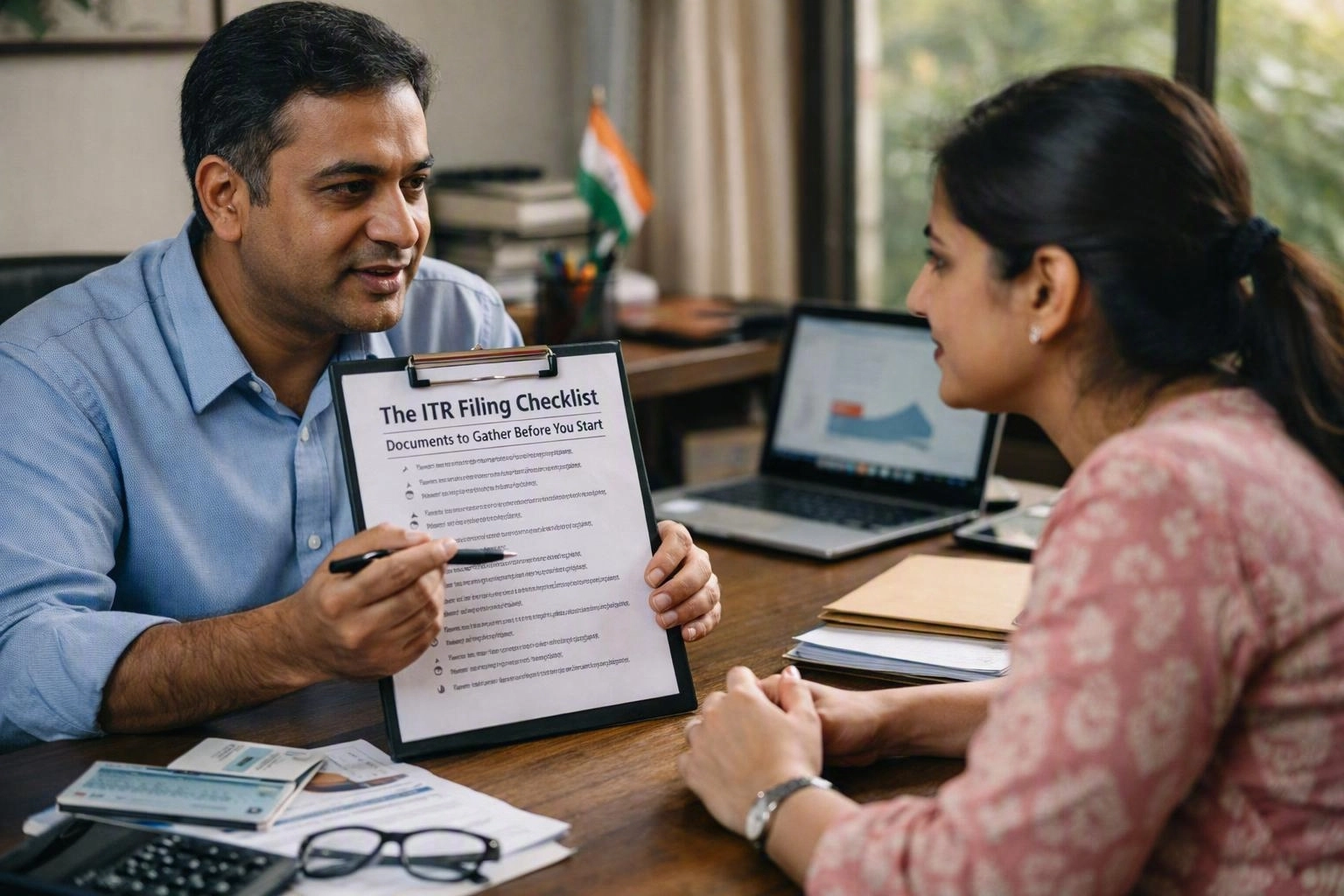
Use this page as a practical tax filing checklist before you start your income tax return. Our team put it together for salaried people, freelancers, landlords, and investors. It brings the key paperwork into one place, so Tax Return Preparation feels less rushed.
If you are handling Personal ITR Filing, the goal is simple. Match your income proof, deductions, and tax credits before you submit. Good records cut errors, support your claims, and help if the portal shows a mismatch.
For many people, the hard part is not the form. It is collecting the right income tax paperwork in the right order. This guide covers salary records, freelance income proof, rental income documents, and capital gains statement papers in a clear way.
Essential Documents Required for ITR Filing in India
Essential documents required for ITR filing in India include Form 16, Form 26AS, bank statements, salary slips, rent receipts, and proofs of capital gains and freelance income. This core set helps you verify earnings, deductions, and tax credits before you file your return.
What documents are required for ITR filing in India? Start with identity-linked tax records. Then add income proof, deduction support, and papers for each income type. This method works well for regular filers and for anyone using Tax Return Preparation in India for the first time.
Before You Start
During Filing
After Filing
Documents a Salaried Person Needs to File ITR
A salaried person needs Form 16, salary slips, Form 26AS, and bank statements to file ITR accurately in India. These records help confirm salary income, exemptions, deductions, and tax already deducted by the employer.
What documents does a salaried person need to file ITR? Start with employer records. Then check tax credits and your own bank records. Under Indian tax rules, Form 16 is commonly expected because it sums up salary income and TDS.
For salaried taxpayers, this mix of employer papers and personal records makes a solid ITR document checklist. It also supports smooth Personal ITR Filing if the portal asks for clarification later.
Documents Required for Freelance Income Reporting in ITR
Freelancers must gather invoices, expense receipts, bank statements, and Form 26AS to report freelance income accurately in their ITR filing. These records help establish gross receipts, allowable expenses, and tax deducted by clients.
What documents are needed for freelance ITR filing? Keep a clear record of what you billed, what you received, what you spent for work, and what tax was deducted. This matters under business income rules and under presumptive taxation. Your records should still support the figures you report.
Freelancers often have income tax paperwork spread across apps, emails, and bank accounts. We usually suggest one folder for each month. That makes tax filing easier and helps you support your deductions later.
Documents Needed to Report Rental Income in ITR
To report rental income in ITR, rent receipts, rent agreement copies, and bank statements reflecting rent deposits are required. These documents help establish the amount received, the period of tenancy, and the terms of the lease.
What documents are needed to report rental income? Keep a full landlord file that shows who stayed in the property, how much rent was due, and how much was paid. It should also show if any local agreement terms affect reporting. Regional differences can happen because rent laws and agreement practices are not always the same.
These rental income documents are very useful when receipts and lease terms do not line up with the financial year. A neat record also helps if your return is later checked against AIS data or bank entries.
Documents Required for Reporting Capital Gains in ITR
Capital gains reporting in ITR requires capital gains statements, transaction proofs, and Demat account statements for accuracy. These records help you classify gains properly and compute purchase cost, sale value, and holding period.
What documents are needed for capital gains in ITR? Collect every paper that shows when you bought the asset, when you sold it, what charges applied, and how the gain or loss was worked out. This applies to shares, mutual funds, property, bonds, and other taxable transfers.
When this paperwork is incomplete, capital gains statement errors are common. Cross-check broker records with AIS and bank credits. That can reduce reporting mistakes in your income tax return.
Understanding the Role of Form 16, Form 26AS, and AIS in ITR Filing
Form 16, Form 26AS, and AIS are key documents providing salary details, tax credits, and comprehensive financial information essential for accurate ITR filing. Together, they help reconcile employer data, tax deduction entries, and broader transaction reporting before submission.
Do I need Form 16, Form 26AS and AIS for ITR filing? In many cases, yes, because each one has a different job. Form 16 is the employer's salary and TDS summary. Form 26AS is the official tax credit statement that shows taxes deposited against your PAN. The Annual Information Statement (AIS) is broader and may include savings interest, securities trades, dividends, and other financial data.
Read these three documents together, not as replacements for each other. If Form 16 shows tax deducted but Form 26AS does not, fix that mismatch first. Local compliance rules give clear weight to tax credits shown in Form 26AS. AIS then works as a wider check and may show items missing from your own records.
In practical tax filing, Form 16 helps salaried taxpayers report job income correctly. Form 26AS confirms TDS and other credits. AIS gives a wider picture of reportable transactions. They do not replace salary slips, invoices, or a bank statement, but they help confirm that your return is complete.
If you are not sure where to begin, start with Form 26AS and AIS. Then move to your own source papers. That order often makes ITR Filing smoother because you can catch mismatches before you submit.
Common Red Flags When Preparing Documents for ITR Filing
Common red flags include mismatched documents, missing proofs, and incorrect PAN details that can delay or complicate ITR filing. A quick review of these issues before submission can prevent avoidable notices and corrections.
If any of these show up, pause and fix the records first. Clean financial documentation is easier to support than a rushed filing with later corrections.
Questions About ITR Filing in India
If you want a second set of eyes on your paperwork before filing, our team can help. We'll organise your tax return documents and spot mismatches early.
Related Resources
Benefits of ITR Filing for Salaried Individuals
Why It MattersBenefits of Online ITR Filing Help for Freelancers and Small Businesses
benefits of online ITR filing help for freelancers and small business
What It CostsBusiness and Freelancer ITR Filing: Costs, Scope, and What to Expect
business ITR filing charges India
What It CostsITR Filing for Capital Gains and House Property Income: Fees and Service Scope
capital gains ITR filing charges India