Business and Freelancer ITR Filing: Costs, Scope, and What to Expect in India
Business ITR filing charges in India vary based on the type of business, income complexity, and the documents you provide. Freelancers usually pay less than small or corporate businesses. Charges also depend on the ITR form, checks for TDS and advance tax, and document preparation. Knowing these factors helps businesses and freelancers plan their income tax return filing budget in India.
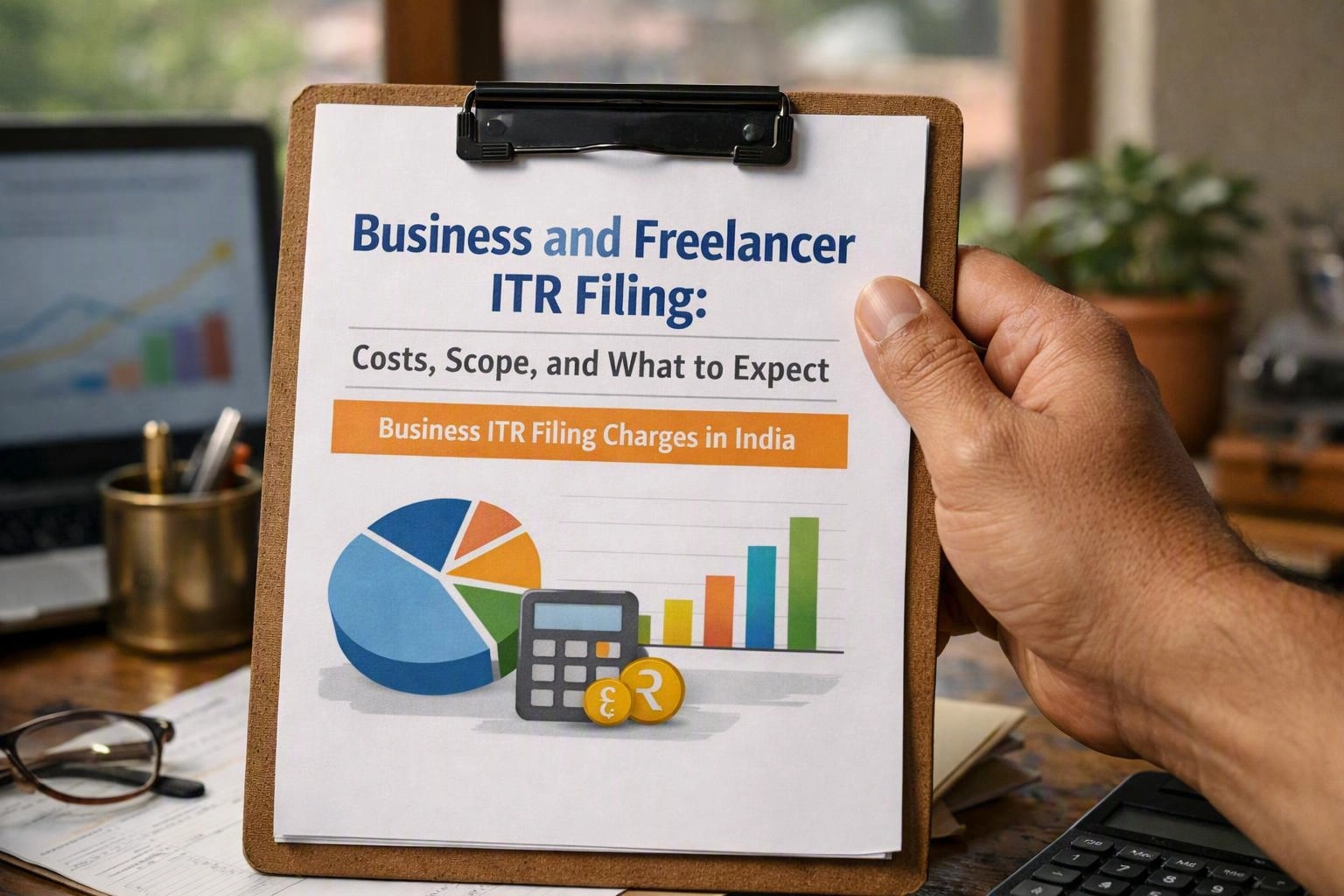
Business and Freelancer ITR Filing includes costs, scope, and filing steps for income tax return filing in India. Freelancer returns often cost less because the income is simpler. Small business filing usually needs a wider review, more records, and closer tax checks before submission.
This guide explains what changes tax filing charges and which records matter most. It also shows what support is usually included in yearly compliance work. You’ll also see the local relevance of Freelancer ITR Filing and Small Business ITR Filing across different work setups.
In real cases, a solo consultant, writer, designer, or developer often has fewer moving parts. A trader, shop owner, or service firm usually has more. Staff payments, vendor entries, and GST overlap can widen the work. So, Income Tax Filing for Freelancers is often narrower than filing for a small business.
Location can also affect the work. Some cities have higher professional costs, while smaller markets may have simpler support. The filing can take longer if books are incomplete. It can also expand if bank entries need sorting or old tax notices need review.
Document readiness matters a lot. If PAN details, bank statements, invoices, and expense proofs are already sorted, filing is usually faster. If records are mixed up or missing, more work is needed. Reconciliation then becomes part of the job, and that affects timing and effort.
We tell clients to budget by complexity, not only by business size. A freelancer with foreign receipts or advance tax issues may need more work. A local shop with clean books may need less. That’s why Business ITR Return Filing in India isn’t one flat service.
Understanding ITR Filing Costs for Freelancers and Businesses in India
Freelancer ITR filing costs in India are generally lower than those for small businesses due to simpler income structures. Small business ITR filing charges vary depending on turnover, complexity, and compliance requirements. Both depend on documentation and tax form selection.
For a freelancer, the main cost drivers are usually income sources and expense tracking. The tax route also matters. Some cases fit presumptive taxation, while others need full profit calculation. One bank account and clear invoices usually mean a lighter filing process.
Small business work often covers more ground. It may include sales records, purchase records, depreciation, drawings, and TDS certificates. Taxes already paid may also need checking. If books need cleanup, the job goes beyond filing and turns into a deeper review.
The chosen form matters too. Some taxpayers can use a simpler route under presumptive taxation. Others must report fuller business details. That changes the review level, the schedules, and the checks needed before filing, so the cost reflects the thinking involved, not just form submission.
Indian tax rules also shape the scope. Presumptive taxation can reduce reporting work for eligible taxpayers. That may lower filing effort, but audit cases, high turnover, or mismatches in tax data can make the work more detailed. Those cases usually take longer.
If you're asking, “How much does ITR filing cost for a freelancer in India?” the answer depends on complexity. The same applies to small business ITR filing. Most professionals don’t use one fixed rate for every case. We review your records first, then define the real filing scope.
Comparing ITR-3 and ITR-4 Forms for Business Income
ITR-3 is used by individuals and Hindu Undivided Families with income from a proprietary business or profession, while ITR-4 is for those opting for presumptive income tax schemes. Choosing the correct form affects filing charges and compliance scope.
ITR-3 is usually for individuals and HUFs with business or professional income that needs fuller reporting. This can include proprietors, consultants, and other professionals. It applies when presumptive taxation does not fit or is not chosen. Since the form needs more details, filing often takes more time.
ITR-4 is the simpler form for eligible taxpayers using the presumptive tax scheme. It often fits certain businesses and professions under the rules. Because disclosures are lighter, filing can be quicker. That works well when eligibility is clear and records support the method used.
The difference is not just technical. It also affects tax filing charges. A presumptive return may need less rebuilding of records. A detailed business return may need closer review of turnover, expenses, assets, and schedules. If the wrong form is picked first, time is lost.
Indian tax law makes this choice important. Presumptive taxation can simplify yearly filing for eligible taxpayers, but turnover limits, profession type, and reporting rules must be checked first. If the case doesn't fit, the taxpayer may need a fuller form and a wider filing process.
For business income, the key point is legal fit. The easiest form is not always the right one. We check your income pattern, books, and reporting method first. That helps the ITR Filing process stay correct and lowers the risk of later notices.
Documents Required for Freelancer and Business ITR Filing in India
Freelancers need PAN, bank statements, invoices, and expense proofs. Businesses require financial statements, TDS certificates, audit reports if applicable, and advance tax receipts. Proper documentation ensures accurate and timely filing.
For freelancers, clean records usually mean faster filing. For businesses, the same rule applies, but the document list is wider. Income tax return filing often needs financial statements and cross-checks. Keeping papers ready helps avoid delays during online ITR filing.
Does Business ITR Filing Include TDS and Advance Tax Checks?
Business ITR filing in India typically includes verification of TDS deductions and advance tax payments. These checks ensure compliance and reduce chances of notices from tax authorities.
TDS checks usually compare deduction records with the income shown in the return. That step matters. Mismatches can reduce tax credit or change the final tax payable. They can also lead to questions after filing.
Advance Tax review is just as important. Payments made during the year should match the return. If any installment was missed or underpaid, the return should show that clearly. Interest impact may also apply in some cases.
These checks are a practical part of Indian tax filing. The system depends a lot on tax already deducted or paid in advance. If you ignore these items, mismatch issues can appear later. That can happen even when income reporting is correct.
In business cases, this review may also cover vendor deductions and client deductions. Tax credits should line up with books and receipts. We include these checks when records are provided. They help improve tax compliance and reduce notice risk later.
Cost Factors Influencing Business and Freelancer ITR Filing Charges
Several factors influence ITR filing costs for businesses and freelancers, including income complexity, document readiness, choice of ITR form, and additional services like audit or tax planning.
| Factor | Why it changes the cost | What to prepare |
|---|---|---|
| Income complexity | Multiple clients, mixed personal and business entries, foreign receipts, or several income heads increase review time and reconciliation work. | Clear income summary, bank-wise transaction notes, invoice register, and expense classification. |
| Choice of ITR form | A presumptive route may be simpler, while a detailed business form may need fuller disclosures and schedule completion. | Turnover details, profession category, previous filing basis, and any presumptive taxation eligibility notes. |
| Document readiness | Organised records reduce time spent on follow-up, cleanup, and tax return preparation adjustments. | PAN card, statements, invoices, expense proofs, TDS certificates, and advance tax receipts in one folder. |
| Compliance checks | TDS verification, advance tax matching, and consistency review with other filings broaden the work beyond basic submission. | Portal data, challans, prior returns, GST summaries where relevant, and any mismatch explanations. |
| Audit or special review | Cases involving tax audit, carry-forward losses, notices, or major corrections require more technical analysis. | Audit report, books of account, notice copies, prior-year workings, and supporting schedules. |
| Location-driven consultancy effort | Regional variations in tax consultancy fees across India’s diverse business environments can affect service expectations and turnaround. | A concise business profile, filing history, and records prepared in a standard digital format for smoother remote review. |
Most cases fit into common complexity ranges, not fixed templates. A simple freelance return may need only a limited review. A business case with ledger cleanup and TDS checks may take much more time, so tax filing charges should be judged by scope, not only by category.
Local factors matter too. Presumptive tax scheme eligibility can reduce the work. TDS and advance tax mismatches can increase it. Different business environments across India can also affect support needs. Together, these points shape the real cost of tax return submission.
Money-Saving Tips for Business and Freelancer ITR Filing in India
Freelancers and businesses can reduce ITR filing costs by organising documents early, choosing the correct ITR form, opting for bundled services, using online filing platforms, and consulting tax experts proactively.
These steps can save money and improve accuracy. Clean records and early planning make filing easier near the deadline. They also help spot advance tax gaps and missed TDS credits before submission. That can prevent last-minute stress and extra work.
Choosing the Best ITR Filing Service for Your Business Income
Selecting the best ITR filing service depends on the business size, income complexity, and required support. Services offering comprehensive compliance, TDS and advance tax checks, and expert advice provide better value for business income filing.
If you're comparing providers, start with scope. The best service for business income does more than upload a return. It should review records, confirm the right form, check tax credits, and explain risk areas clearly. That matters even more when books are incomplete.
Look for support in three areas. First, document review helps confirm whether your records are ready. Second, compliance checks cover TDS, advance tax, and account consistency. Third, post-filing support helps if a correction or notice comes later. Each part adds real value.
A good provider should also understand Indian tax rules and day-to-day filing issues. That includes presumptive taxation, audit triggers, and different business conditions. A freelancer may need a simpler review. A growing small business often needs wider support tied to tax compliance and financial records.
We focus on what your return actually needs. We don't force every case into the same process. For some clients, that means simple Income Tax Filing for Freelancers. For others, it means broader review under Business ITR Return Filing and cleaner yearly compliance.
Questions About ITR Filing in India
Related Resources
Benefits of Online ITR Filing Help for Freelancers and Small Businesses
benefits of online ITR filing help for freelancers and small business
How It WorksHow Professional Online ITR Filing Works From Documents to Verification
online ITR filing process with tax consultant India
What's RequiredThe ITR Filing Checklist: Documents to Gather Before You Start
documents required for ITR filing in India
What's RequiredFiling ITR When You Have Capital Gains or Multiple Income Sources
ITR filing checklist for capital gains and multiple income sources India