Understanding the Duration of Revised ITR Filing for Corrections
A revised Income Tax Return filing typically takes between 15 to 30 days to process after submission. The timeline depends on the type of correction, verification status, and tax department speed. Simple fixes often move faster, but more detailed changes can take longer. Filing on time and using accurate documents can help shorten the wait.
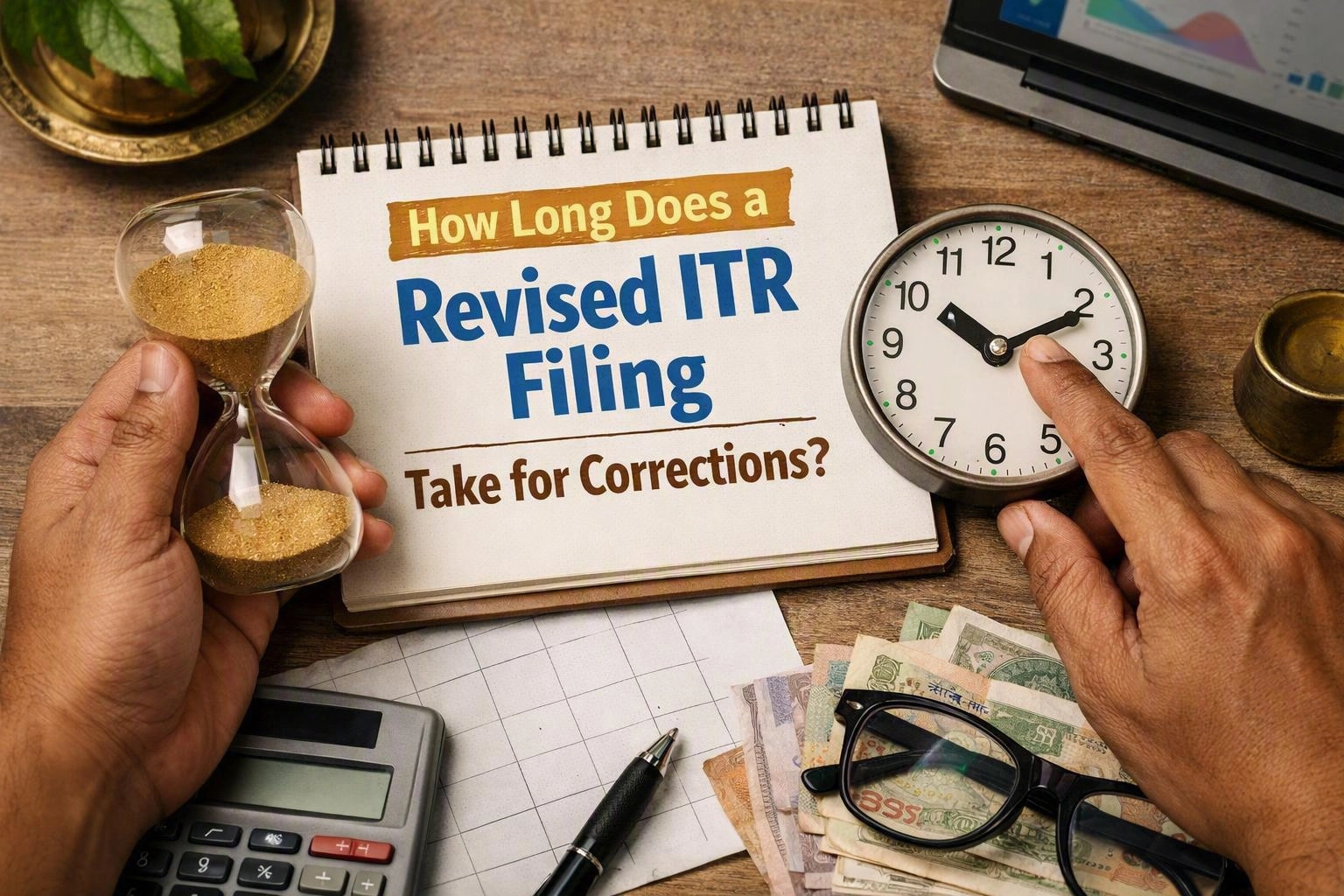
Typical Timeline for Revised ITR Filing Processing
Revised ITR Filing processing time changes with the case, from about 15 days to around 30 days. The exact filing timeline depends on what changed, if verification is complete, and how fast the department clears the correction.
For most taxpayers, it helps to treat the timeline as a range, not a fixed date. A corrected income tax return with one small change often moves quicker. An amended ITR submission with many income, deduction, or record changes may take longer. Processing Duration also depends on whether the records were clear during document submission.
| Project Scope | Typical corrections involved | Typical duration range | What usually affects timing |
|---|---|---|---|
| Simple | Minor personal detail update, small deduction correction, limited data mismatch | About 15 to 20 days | Usually faster when verification is completed quickly and records match portal data |
| Average | Income figure edits, revised schedules, moderate ITR correction request with a few documents | About 20 to 25 days | Timing depends on document accuracy, review queues, and whether clarification is needed |
| Complex | Multiple corrections across income, tax credits, losses, exemptions, or supporting statements | About 25 to 30 days | Longer review is common when the case has layered changes or incomplete supporting proof |
Simple vs Complex Revised ITR Cases
A Simple Revised ITR usually means one small correction. That may include fixing bank details, updating a deduction entry, or correcting a reporting mistake. These returns often move faster because the review is smaller and easier to match with existing records.
A complex revised ITR includes several changes at the same time. It may involve salary and business income updates, revised tax credits, changed losses, or a different tax amount. A complex case may also face closer review if the old data does not match the amended submission.
In simple terms, more changes usually mean more checking. That can add extra time before the revised return is fully processed.
Factors Influencing the Duration of Revised ITR Filing
Several things affect the duration of revised ITR filing. These include the type of correction, verification status, document accuracy, and department workload. Returns with clear records and quick validation often move faster. Wider corrections or missing proof can stretch the timeline.
Impact of Verification on Revised ITR Timeline
Verification Process plays a big role in how fast an amended return moves ahead. Even a simple correction can get stuck if verification is still pending. In many cases, the return is not ready for review until that step is done.
When verification is completed quickly, the system can place the revised filing into the normal queue sooner. That's why many taxpayers see faster movement after timely validation through the accepted portal method.
Often, the delay is not the correction itself. It's the missed follow-up after filing, so checking verification status matters just as much as checking the revised figures.
How to Expedite the Revised ITR Filing Process?
Revised ITR Filing can often move faster when you submit correct information, verify quickly, and use clear supporting documents. Faster processing usually comes from avoiding review problems. Not from getting special priority.
If you need help with a complicated case. Our team can guide you through an Income Tax Return Correction. We'll help make the return complete, verified, and easier for the department to process.
Common Mistakes That Delay Revised ITR Processing
Processing Delays usually happen because the revised return has mismatched figures, missing proof, or incomplete verification. Most delays can be avoided when you make only needed changes and support them with accurate records.
Understanding Income Tax Return Correction Services
Income Tax Return Correction services help taxpayers fix errors in a filed return with better accuracy, cleaner documents, and fewer delays. They are most useful when the issue affects tax calculation, verification, or several parts of the return.
A correction service usually reviews the original filing, finds what needs to change, and prepares the revised income tax return. It also helps match figures with records. This can help with small mistakes and with harder cases. Like schedule changes or tax credit mismatches.
Many taxpayers use a Revised ITR Filing Service because they want the correction handled in an organised way. The goal is not to avoid tax authority review. It is to reduce mistakes that make processing take longer.
In practice, people may call this revised return help, corrected return assistance, or amended filing support. If you are dealing with Income Tax Return Correction in India, the revised entry should match the records already on the portal. We also assist with ITR Filing questions when a taxpayer is unsure if revision is the right next step.
Contact our team if you want help reviewing an amended ITR submission before you file it.
Questions About ITR Filing in India
Related Resources
Benefits of ITR Filing for Salaried Individuals
Compared ToCA, Online Platform, or Self-Filing, Which ITR Option Is Right for You?
CA vs online ITR filing vs self filing India
How It WorksHow expert Online ITR Filing Works From Documents to Verification.
online ITR filing process with tax consultant India
What It SolvesIncome Tax Refund Delayed or Not Received? Find the Problem
income tax refund not received or delayed India